Tangem Wallet Review: A Seedless NFC Card That Trades the Phrase for a New Risk
Tangem's card wallet removes the recovery phrase and costs $54.90 for two cards. We weigh that against no screen on the card, firmware that cannot be patched, and a lab laser attack disclosed in July 2026.
The verdict
Tangem is a good cold wallet for people who fear phishing a recovery phrase more than they fear losing a card. A two-card set costs $54.90, keys never leave a certified chip, and a phrase cannot be stolen because none exists. The weak points are real: the card has no screen, firmware cannot be patched, and lose every card without a backup and the funds are gone for good. Buy three cards and store them apart.
Best for Holders who want cheap cold storage with no seed phrase to guard
Pros
- Two-card set at $54.90 undercuts most screen-equipped hardware wallets
- Keys are generated and stay on an EAL6+ secure element, never exposed
- No recovery phrase to phish, photograph or lose, by default
- Battery-free NFC cards with IP68 rating, and no ongoing subscription
Cons
- No screen on the card, so you confirm addresses on the phone only
- Firmware is frozen at manufacture and cannot receive security patches
- Losing every card with no other backup means permanent loss of funds
- Needs an NFC phone, and asset coverage is narrower than Ledger's
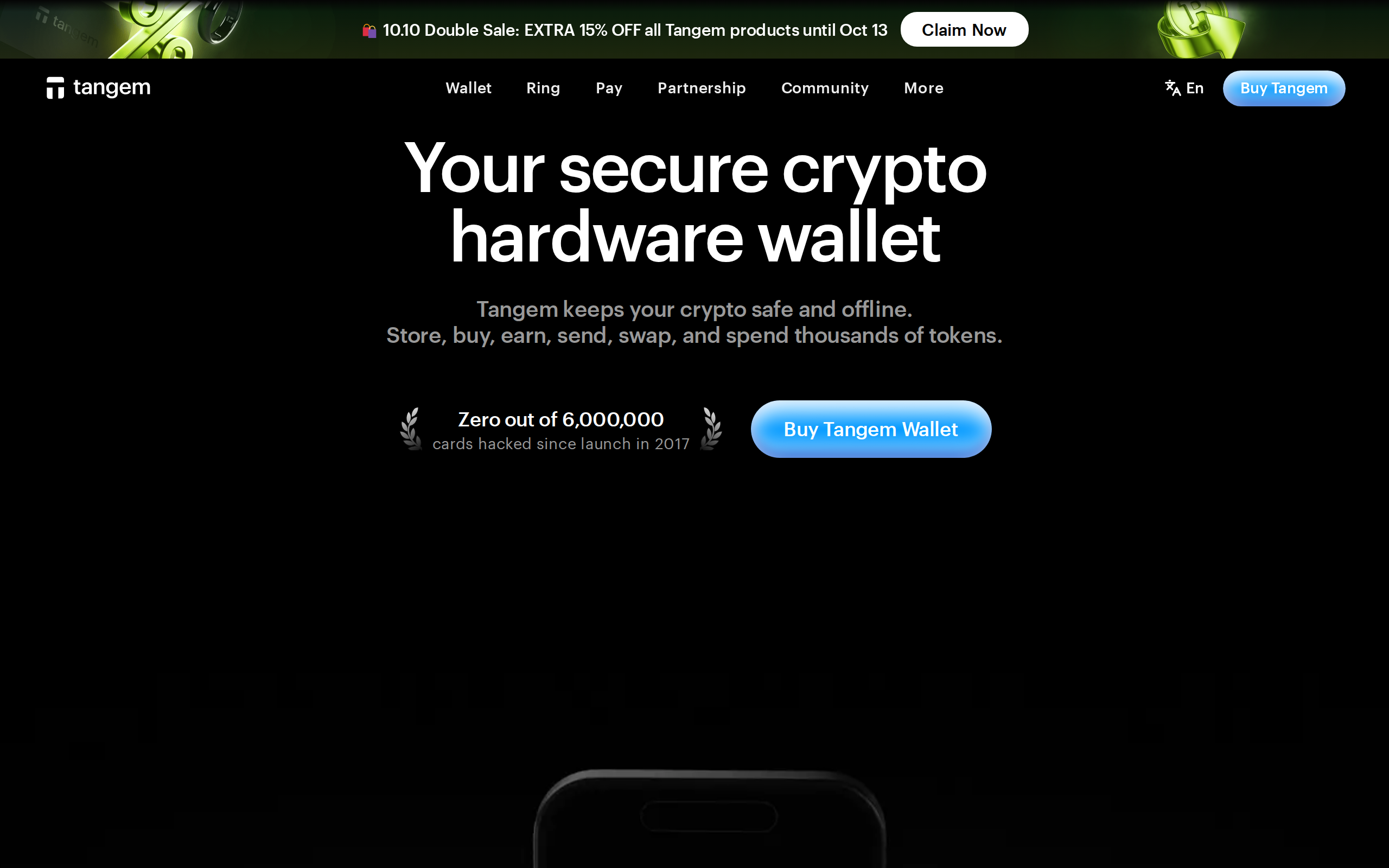
A hardware wallet is usually a small computer with a screen and a list of twenty-four words. Tangem removes both the screen and the words. What is left is a plastic card with a chip, a phone app, and a different way to lose money. Whether that trade is a good one depends on which failure scares you more.
The pitch: no phrase, so nothing to phish
Seed-phrase theft is how most self-custody losses happen. A fake wallet app asks for the words, or a photo of the paper leaks, and the funds go. Tangem's design makes that impossible by default. Private keys are generated on the card and used on the card. When you set up, you tap spare cards against the phone and the key is cloned across them over NFC, so up to three cards share one wallet.
Those cards are the backup. There is no paper, no metal plate and no ritual of splitting words between safes. For a relative who would never store a phrase properly, that is a real improvement.
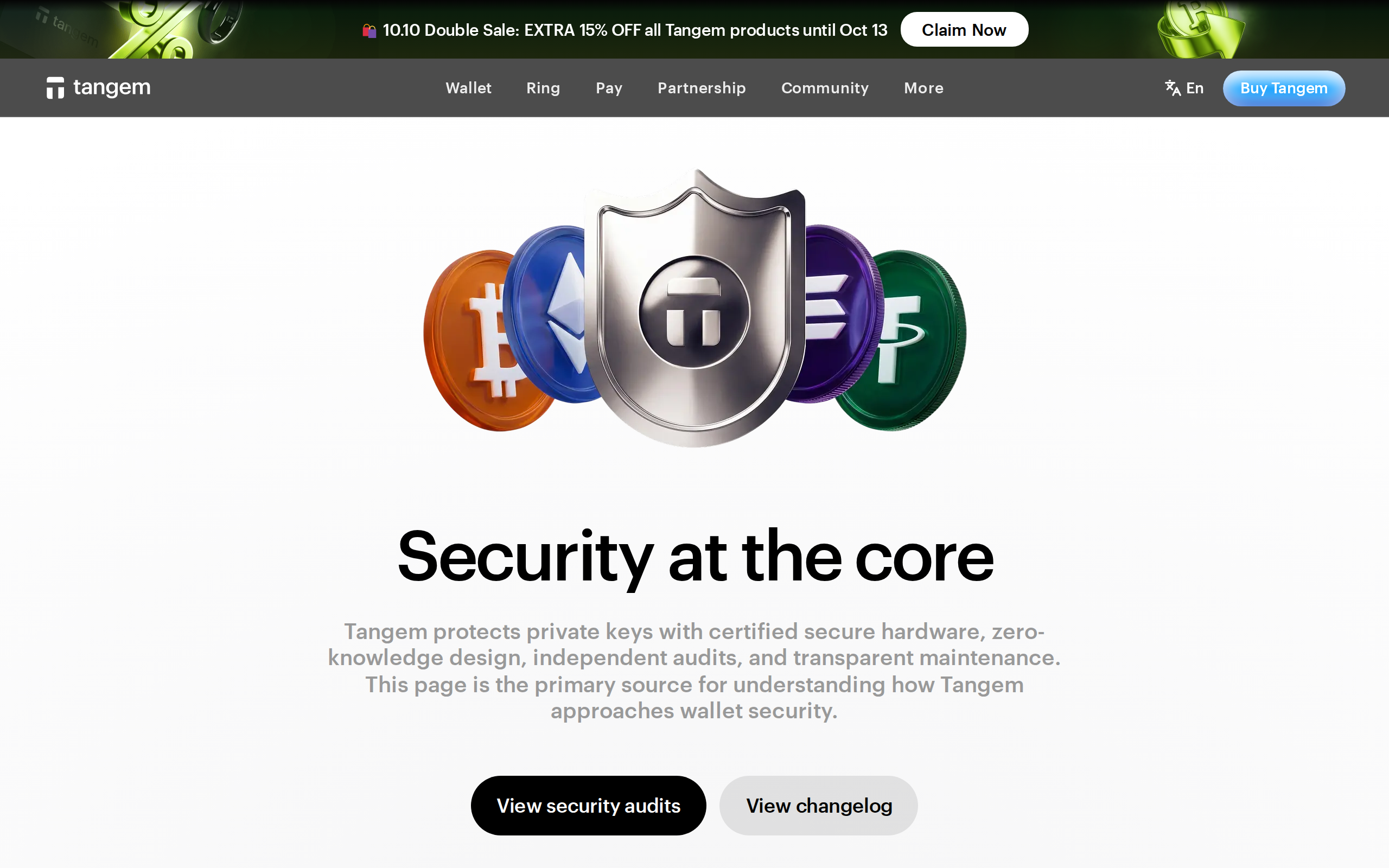
The chip is an EAL6+ certified secure element, according to Tangem's security page, and the cards are IP68 rated with no battery or charging. The page lists three independent audits: Kudelski Security (2018), Riscure on hardware and firmware (December 2023) and Cure53 on the mobile apps (March 2026), none with critical findings.
What it costs
Prices are on the official pricing page: $54.90 for two cards, $69.90 for three, $129.80 for a family pack and $160 for the Ring with two cards. There is no subscription, and standard shipping is free over $100. A $20 bitcoin reward on each order was running at our check, credited within 14 days of activation, with a stated end of November 2. Treat that as a promotion, not a feature.
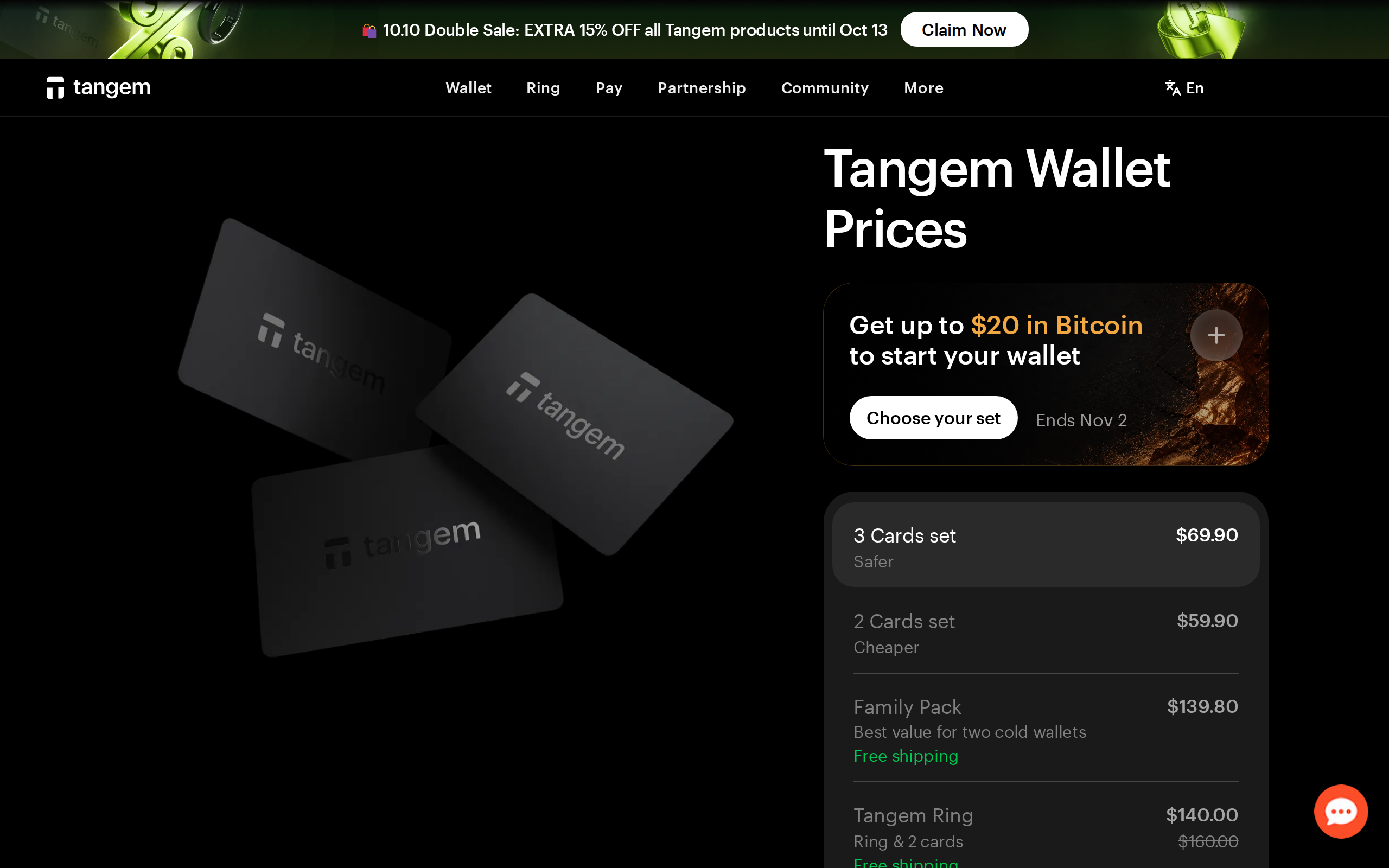
Compare that with screen-equipped rivals. One comparison table we read puts Ledger at $59 to $399 and Trezor at $99 to $249. Tangem is the cheapest way to get certified cold storage, and it is not close.
The failure modes you inherit
Honesty requires the other side of the ledger.
No screen on the card. The app shows the destination address and amount, and the card signs. Malware on a compromised phone could in theory show one address while the card signs another. Ledger and Trezor put the check on a device screen. CryptoSlate's review flags this as a core weakness.
Firmware that cannot be fixed. The card firmware is frozen at manufacture. That removes a whole update attack surface, but it also means a flaw found later stays. In July 2026 Ledger's Donjon lab disclosed a laser fault-injection attack that can reset a card's access code. It needs physical possession, invasive lab work and, by one report, around $250,000 of equipment. Tangem disputed the everyday risk. No patch is possible.
Total loss. If every card is destroyed or lost and you have no other backup, the funds are gone. There is no support desk that can recover them. Unfinished Man's analysis puts it bluntly, and we agree: clone to a third card on day one and keep the cards in different places.
Newer cards can also import or create a recovery phrase, so seedless is the default, not a rule.
Beyond cold storage
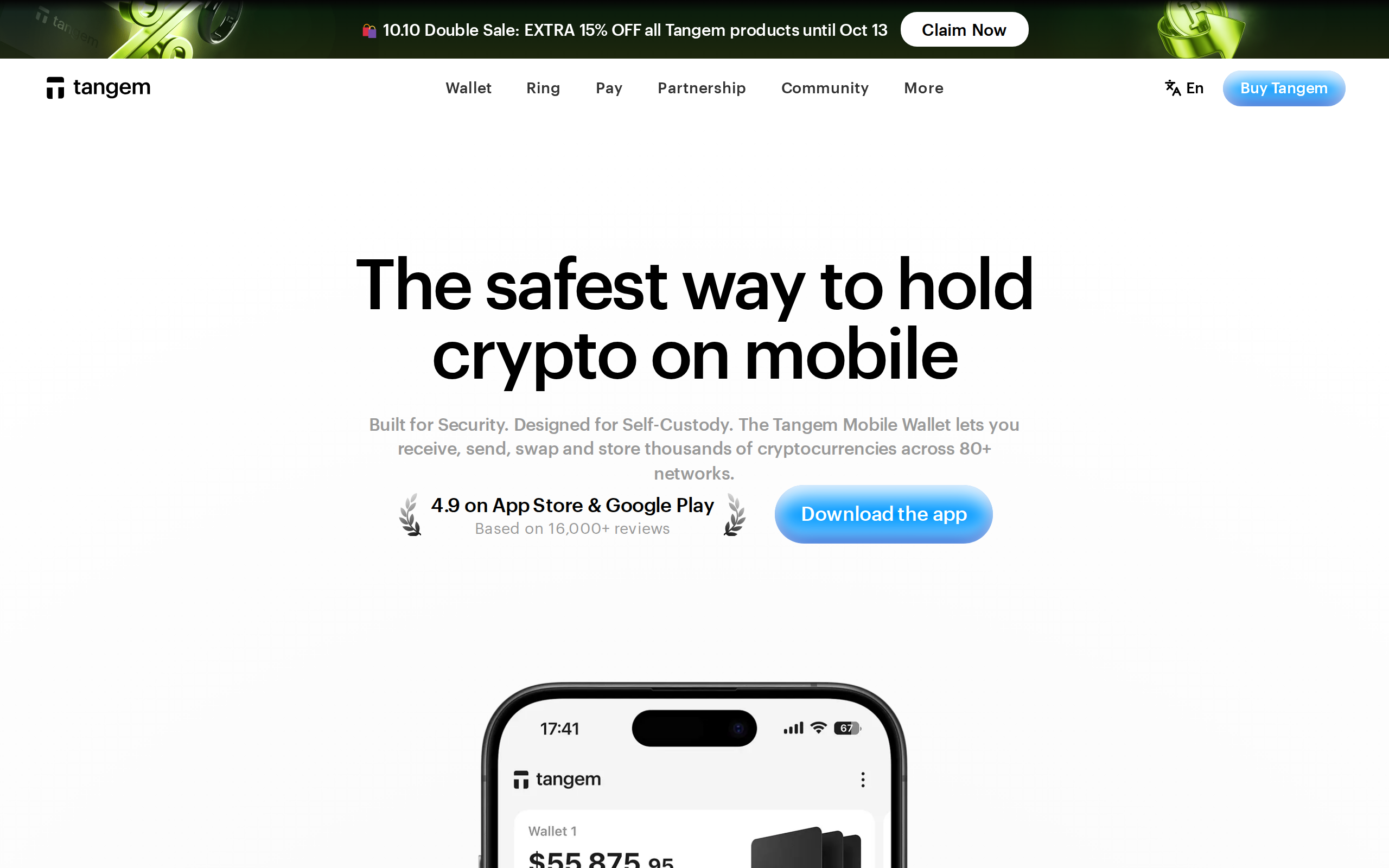
The app covers Bitcoin, Ethereum, Solana, XRP and a long tail of chains. It has swaps through partners, staking through Yield.xyz and P2P.org, and WalletConnect for dapps. Solana NFT support is limited, and independent reviewers count roughly ten major blockchains natively, below Ledger's coverage.
Tangem also sells a mobile-only hot wallet in the same app, and a ring form factor, and a Visa card. The ring is the more novel product.
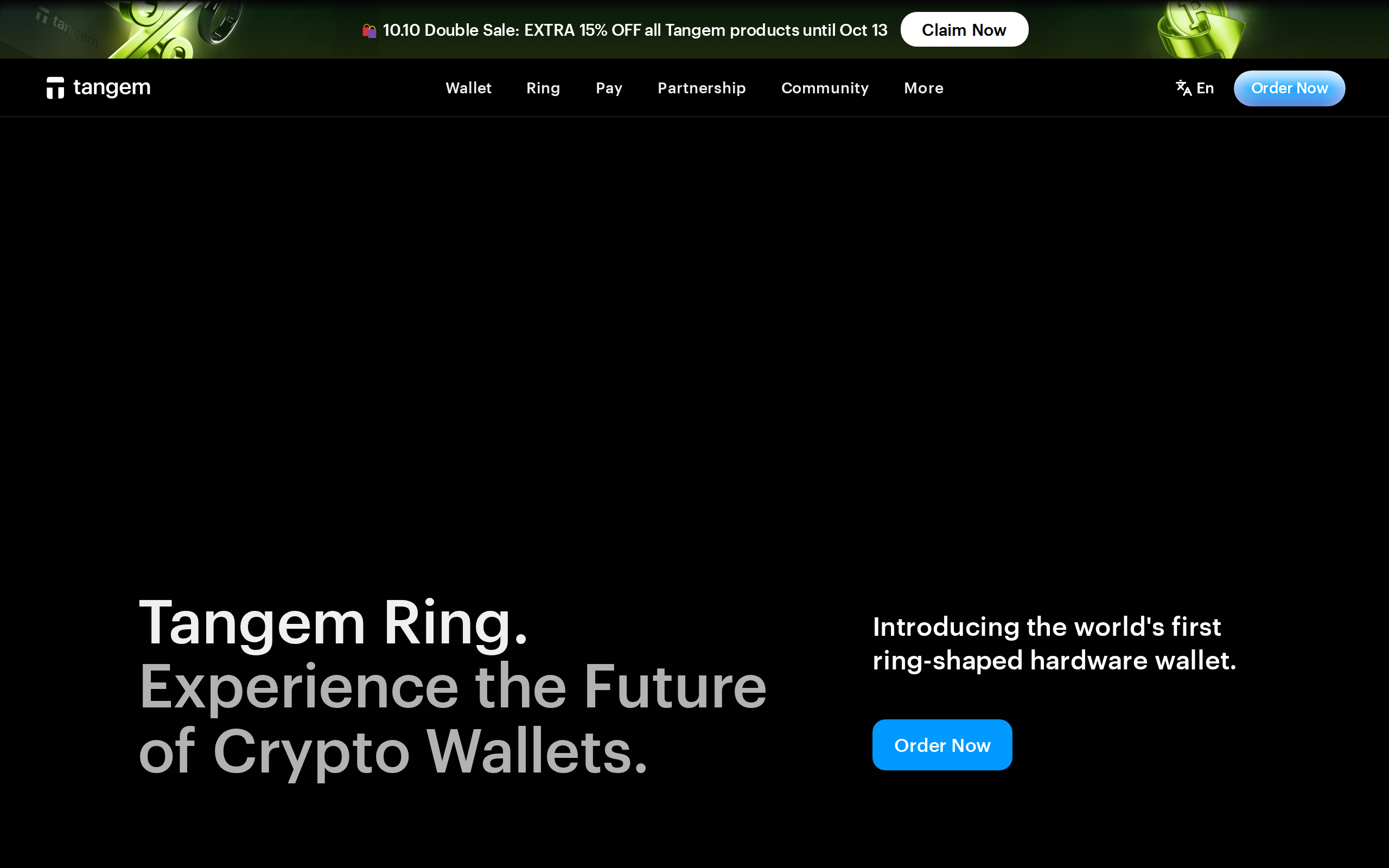
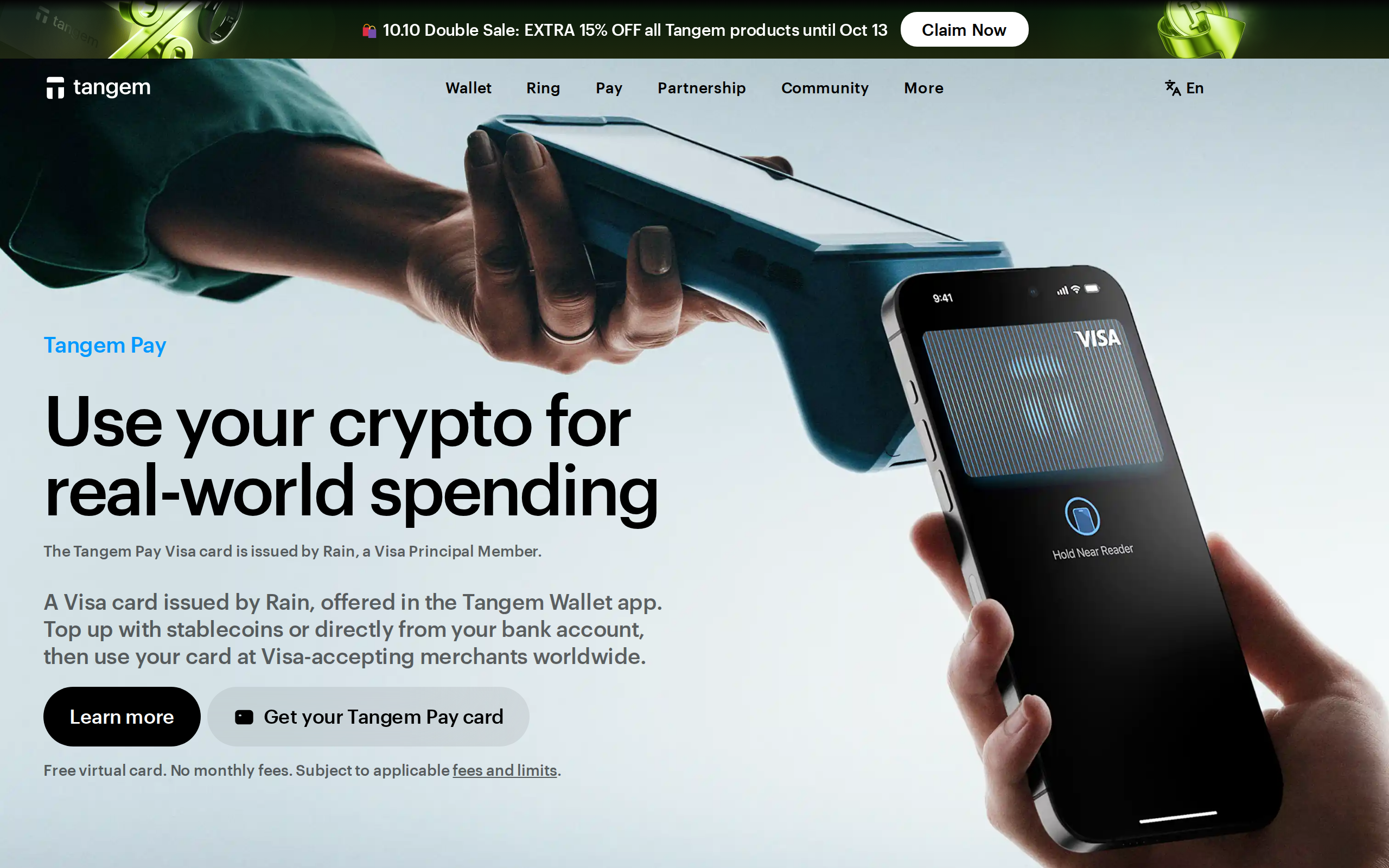
Tangem Pay is a virtual Visa card issued by Rain, topped up with stablecoins or from a bank account. The page describes it as free of monthly fees, subject to limits.
Who should buy it
Buy Tangem if your realistic risk is phishing, you own a recent NFC phone, and you will keep two backup cards in separate places. The three-card set is the right purchase.
Look elsewhere if you hold a large sum and want an on-device screen, or if you want firmware that updates. Ledger Nano Gen5 and Trezor Safe 7 give you that. Independent reviewers have scored Tangem around 7 out of 10 for the same reasons.
None of this is advice tailored to you. Test the recovery by restoring from a backup card before you move meaningful funds.
Specifications
- Form
- Credit-card-sized NFC card, also available as a ring
- Price
- 2-card set $54.90, 3-card set $69.90 (official page)
- Chip
- EAL6+ certified secure element
- Durability
- IP68 rated, no battery or cable
- Backup
- Cards clone the key to each other, up to three
- Seed phrase
- Not needed by default; optional import on newer cards
- Audits
- Kudelski 2018, Riscure 2023, Cure53 (mobile app) 2026
- Display
- None, verification happens in the phone app
- Extras
- Staking, swaps through partners, WalletConnect, Tangem Pay card
As published by Tangem when we tested it.