Ledger Nano Gen5 Review: Is It the Ledger Most Buyers Should Get Over Flex or Nano X?
At $179 the Nano Gen5 sits between the $149 Nano X and the $249 Flex, with a 2.8 inch E Ink touchscreen and the same EAL6+ chip class. We compare what each Ledger gives you for the money.
The verdict
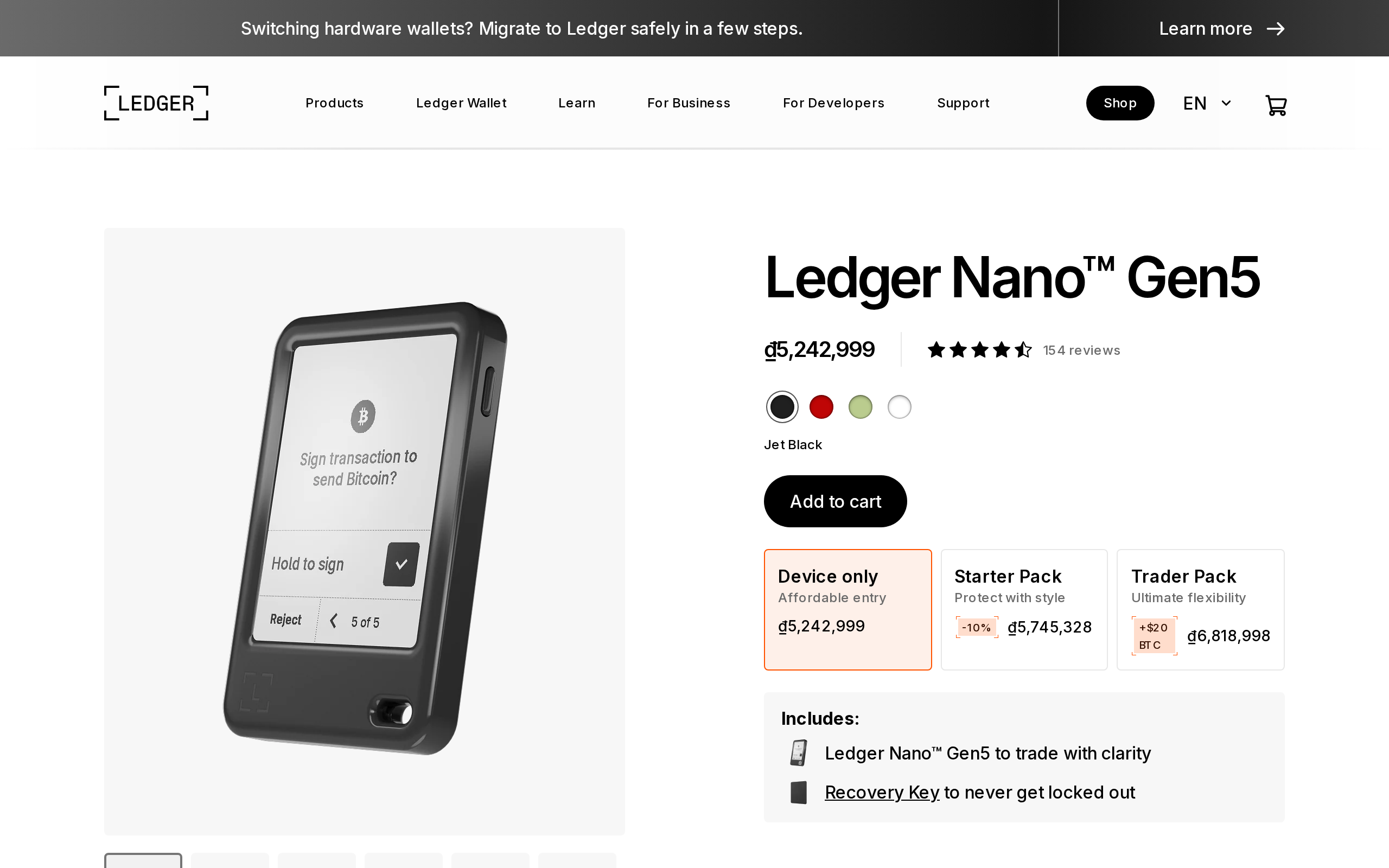
For most buyers the Nano Gen5 is the Ledger to get. It has the Flex's security class, a 2.8 inch E Ink touchscreen, Bluetooth, USB-C and NFC for $70 less, and a bigger screen and newer chip than the $149 Nano X. The trade-offs are a plastic body and less app storage than the Nano X. Pick the Flex only if build quality or display detail matter to you.
Best for Most buyers who want a pocket Ledger with a touchscreen
Pros
- CC EAL6+ secure element, a higher certification than the Nano X's EAL5+
- 2.8 inch E Ink touchscreen is far easier to read and use than the Nano X buttons
- Bluetooth, USB-C and NFC cover phones and desktops, and the Recovery Key
- $179 undercuts the Flex by $70 while sharing its core security design
Cons
- Costs $30 more than the Nano X, which is the better value for pure cold storage
- Plastic body and a monochrome display feel less premium than the Flex
- Reviewers report 1.5 MB of app storage against the Nano X's 2 MB
- Battery is rated for roughly 10 hours of use, so it needs charging
Ledger sells three devices that look like they overlap: the Nano X at $149, the Nano Gen5 at $179 and the Flex at $249. Buyers who want one signer are right to ask which is the sensible middle. After reading the spec sheets and independent reviews side by side, our answer is the Gen5, and the reasons are mostly about what you do not have to pay for.
What the $179 buys
The core of the device is the same class of security hardware as the Flex. Ledger's product page lists an ST33K1M5 secure element with Common Criteria EAL6+ certification. The Nano X is rated EAL5+, per Finder's review, so the Gen5 is a step up on paper.
The other headline is the screen: a 2.8 inch E Ink touchscreen at 300 by 400 pixels, monochrome, with scratch-resistant glass and an anti-glare coating. The Nano X has two buttons and a tiny display. Reading an address or contract details on the Gen5 is easier, and that matters because verifying on the device is the whole point of owning one.
Connectivity is complete: Bluetooth 5.2 for phones, USB-C for computers and Android, and NFC for the Ledger Recovery Key. It measures 79.4 by 53.3 by 8.6 mm and weighs 46 g.
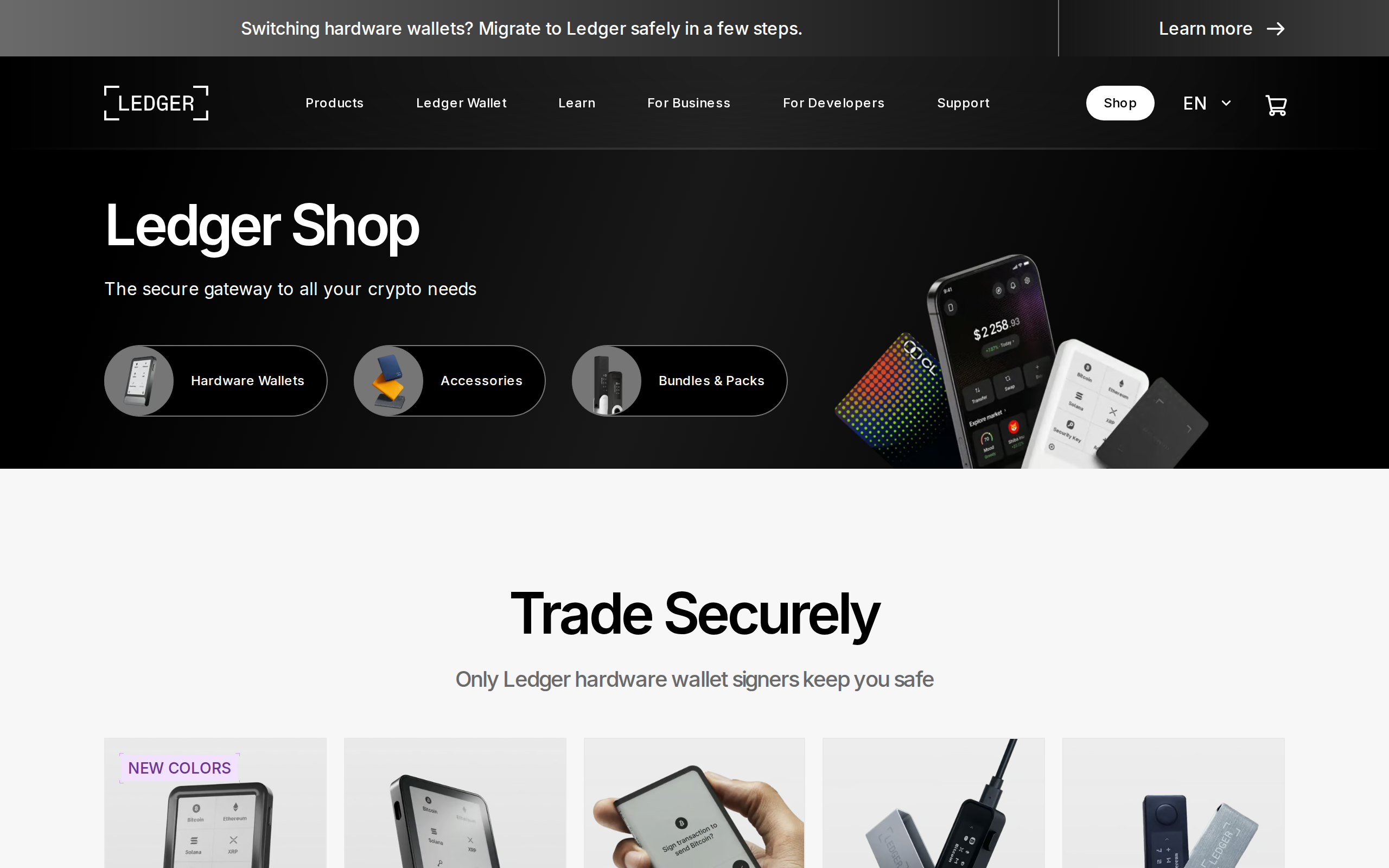
Gen5 against the Flex: what the extra $70 is for
Strip away marketing and the two are close inside. Both use the EAL6+ generation, Bluetooth, USB-C, NFC and Ledger's Transaction Check feature. The Flex puts its money into the body: a higher-resolution 480 by 600 display with 16 grey levels, a stronger glass and an aluminium frame, according to a third-party comparison.
If you will take the device out daily, the Flex's frame may earn its premium. If it lives in a drawer and comes out for the odd transfer, the extra $70 buys little you will use. That is our whole argument for the Gen5.
Gen5 against the Nano X: why we skip the cheaper one
The Nano X at $149 is still a competent device, and for pure cold storage it is the value pick. We would pay the extra $30 for three reasons.
The touchscreen makes checking transactions less of a squint.
The security certification is newer and higher.
The battery runs about 10 hours of use or 150 transactions, per Finder, about twice what the older model offers.
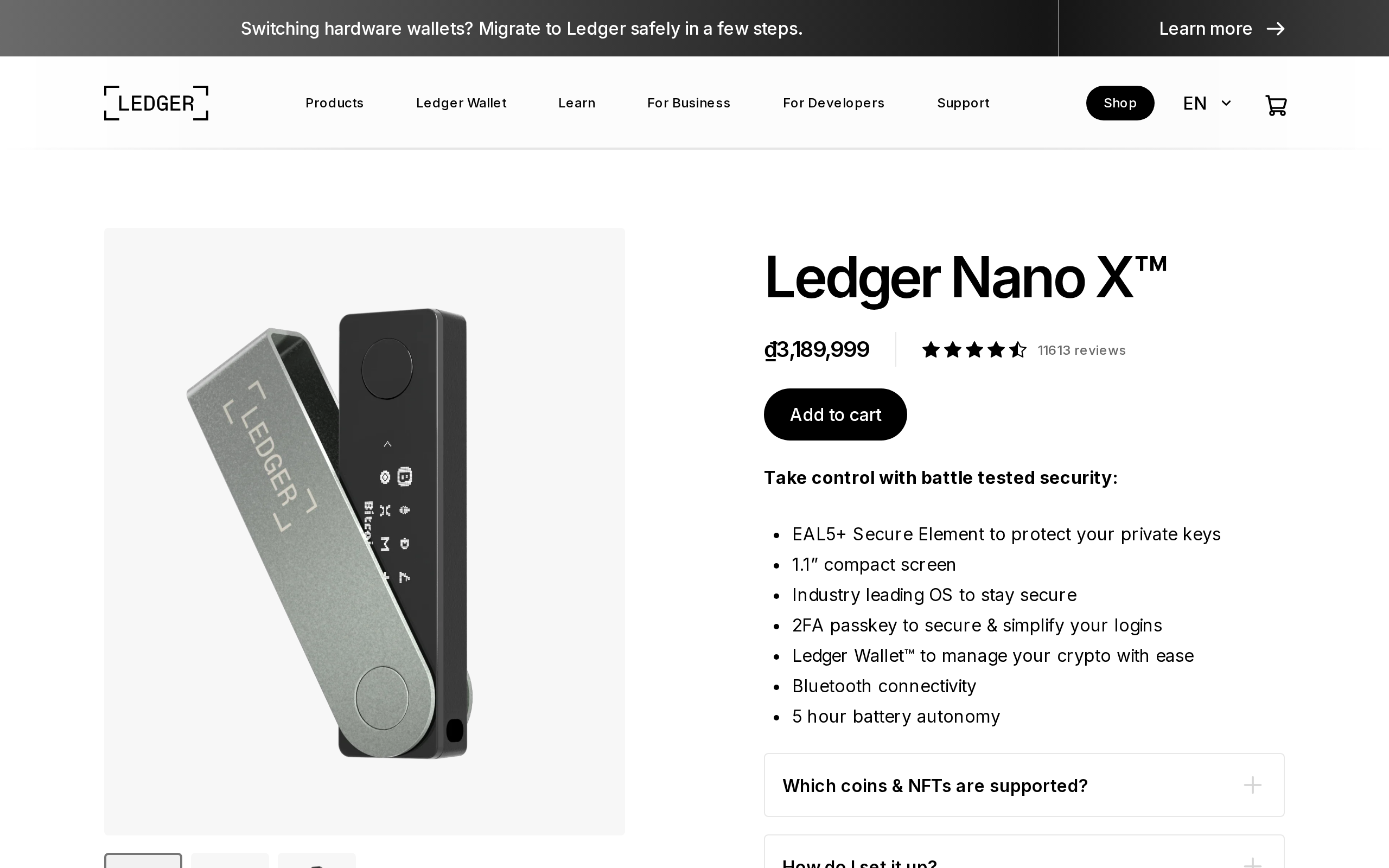
The Nano X wins on one point: app storage. Finder reports 1.5 MB on the Gen5 against 2 MB. If you hold coins on many chains you may have to uninstall and reinstall apps. For a typical holder of ten or fewer assets, that rarely bites.
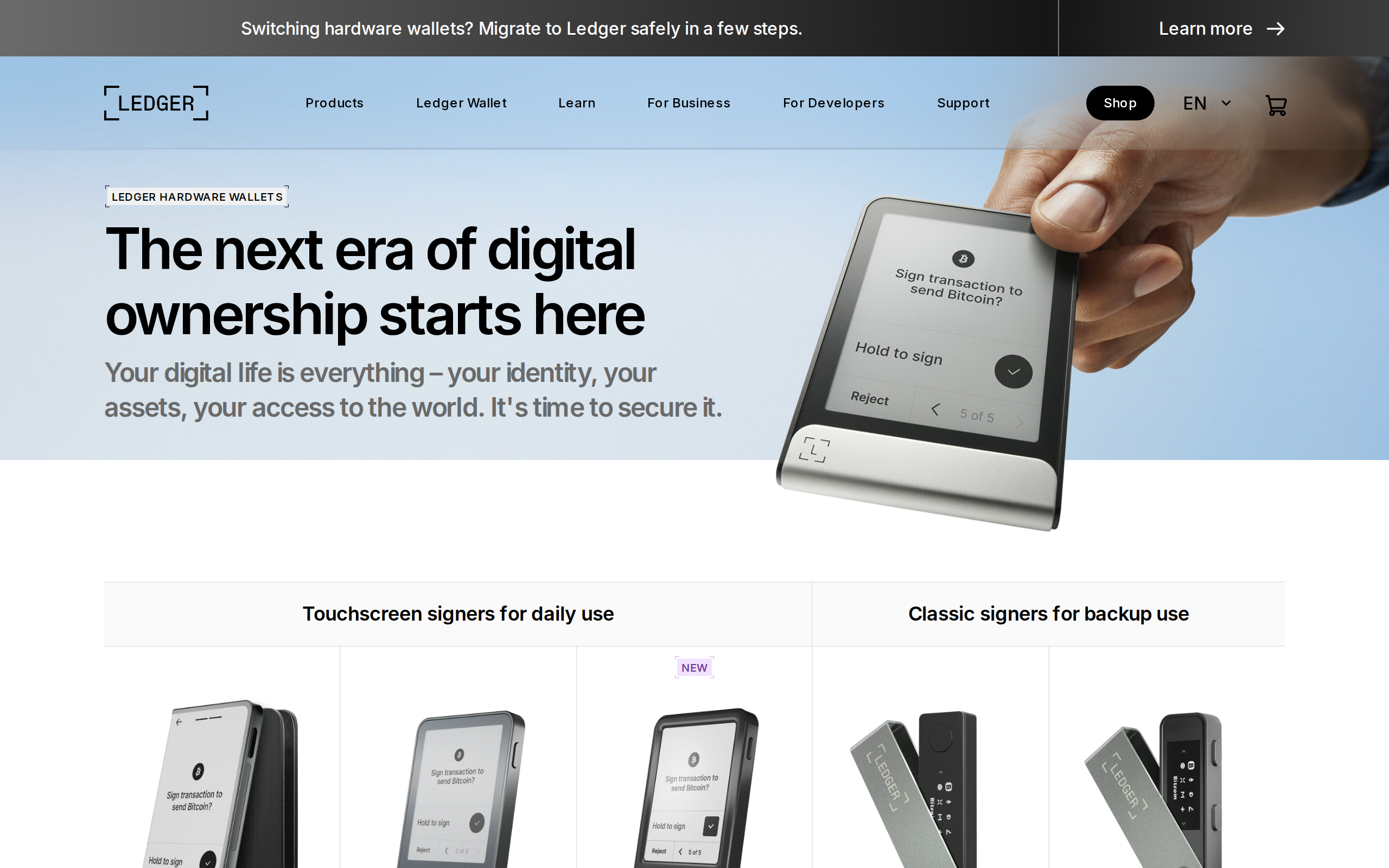
The Recovery Key, and what it means for trust
Ledger ships the Gen5 with support for its Recovery Key, a card that connects by NFC to back up and restore without writing down the usual 24 words. The company also still supports the classic written phrase.
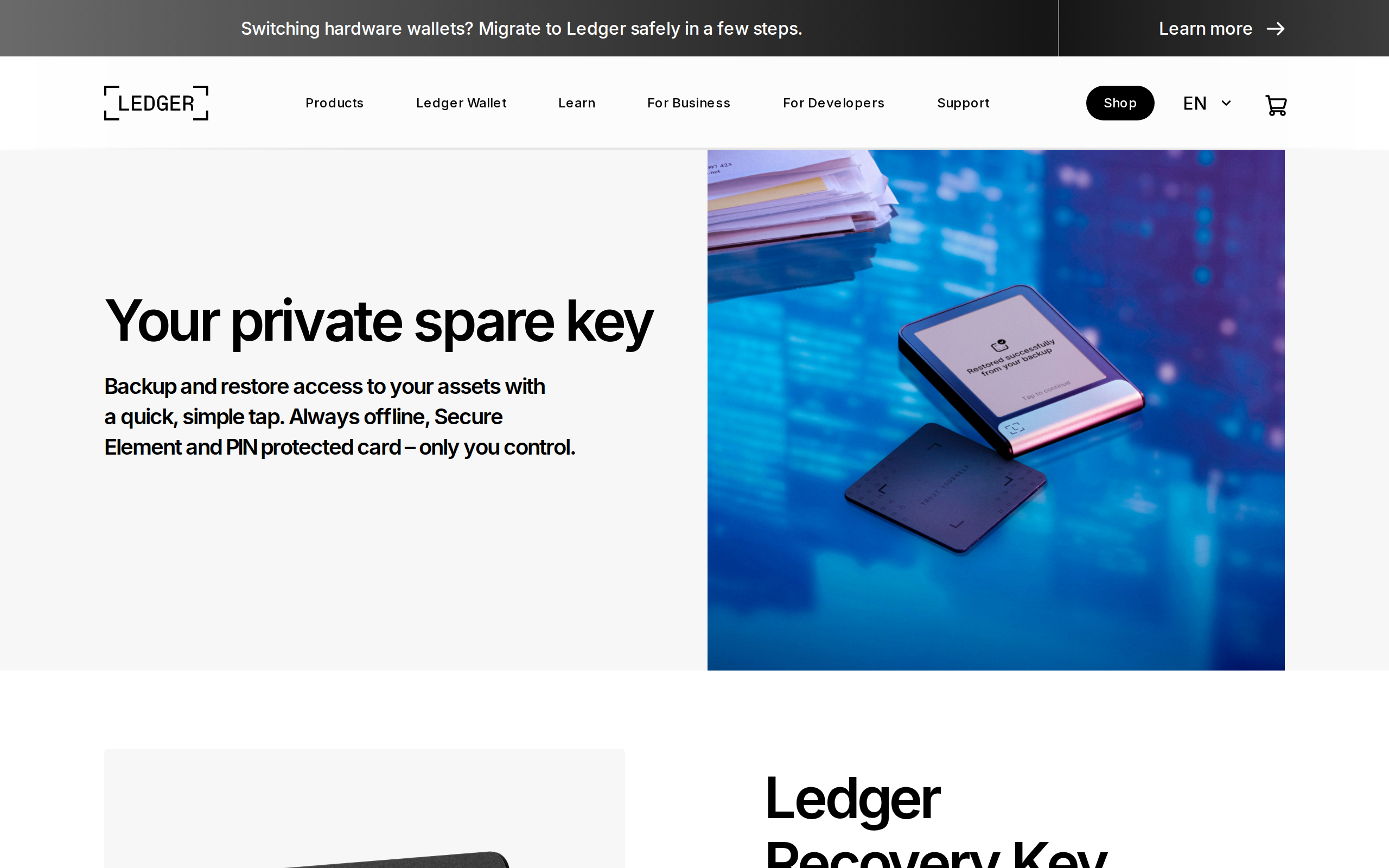
We would be careful here. Ledger's history includes a customer-data leak in 2020 and a storm in 2023 over an optional seed-recovery service. Neither involved keys leaving a device, but both are reasons to read what a new backup feature does before you turn it on. The classic written phrase on paper or steel remains the option with the fewest moving parts.
The software side
The device is only half the product. Day to day you will use Ledger's app, which the company now calls Ledger Wallet, to buy, swap and stake.
Hardware wallets only sign. Anything that needs a price, a route or an exchange partner happens in software, which is the layer where mistakes and phishing sites cluster. Always type the app address yourself, and compare the on-device screen with what the computer shows before you approve anything.
Ledger lists support for 500 plus cryptocurrencies in its own app, and thousands more through third-party wallets such as MetaMask. Fees on swaps and purchases inside the app are paid to partners, so compare them before accepting a quote.
Verdict
The Nano Gen5 scores 8.0. It is the Ledger we would suggest to most people: modern security, a screen you can read, Bluetooth for phones, and a price that stays under $200. Buy the Nano X if you want the cheapest respectable signer. Buy the Flex if build quality is worth $70 to you. Buy only from Ledger's own shop or an authorised reseller, never a sealed box from a marketplace, and treat this as a product review, not personal financial advice.
Specifications
- Price
- $179 (device only)
- Screen
- 2.8 inch E Ink touchscreen, 300 x 400, monochrome
- Connectivity
- Bluetooth 5.2, USB-C and NFC
- Secure element
- ST33K1M5, CC EAL6+ certified
- Size and weight
- 79.4 x 53.3 x 8.6 mm, 46 g
- Coins supported
- 500+ in Ledger Wallet, thousands via third-party wallets
- Backup
- 24-word phrase or Ledger Recovery Key
- Colours
- Jet Black, Cherry Red, Matcha Green, Glacier White
As published by Ledger when we tested it.