Jupiter Review: The Best Route on Solana, and Perps Built for People Who Can Lose It
Jupiter is the swap router most Solana traders already use. We look at how it finds prices, what the commission really is, and why its 250x perps and limit orders deserve more caution than the swap box.
The verdict
Jupiter is the best place to swap on Solana. It compares routes across many venues, the commission is small or zero on large pairs, and you keep your own keys. The perps product is a separate matter: leverage reaches 250x, an hourly borrow fee runs while you hold, and a wrong move liquidates you. Treat swaps as a tool and perps as a high-risk product.
Best for Solana traders who want one router for swaps
Pros
- Compares several routers on every swap, so price is usually competitive
- Ultra commission is 0 to 0.5% by pair, and about 0.02% on SOL and stablecoins
- Non-custodial: you sign from your own wallet and never deposit with Jupiter
- Limit orders, DCA, staking and a developer API sit in one place
Cons
- Solana only, so it cannot help with Ethereum or Bitcoin trades
- Perps allow up to 250x leverage and charge an hourly borrow fee while open
- Fees and withdrawal rules differ by product, which is easy to miss
- Its main X account was compromised in February 2025 to push malicious links
Jupiter does two very different jobs under one logo. The swap box is a router that shops your trade around Solana and hands you the best quote it finds. The perps tab is a leveraged betting product where a small move against you ends the position. We like the first and want you to be careful with the second.
Why the swap box earns its place
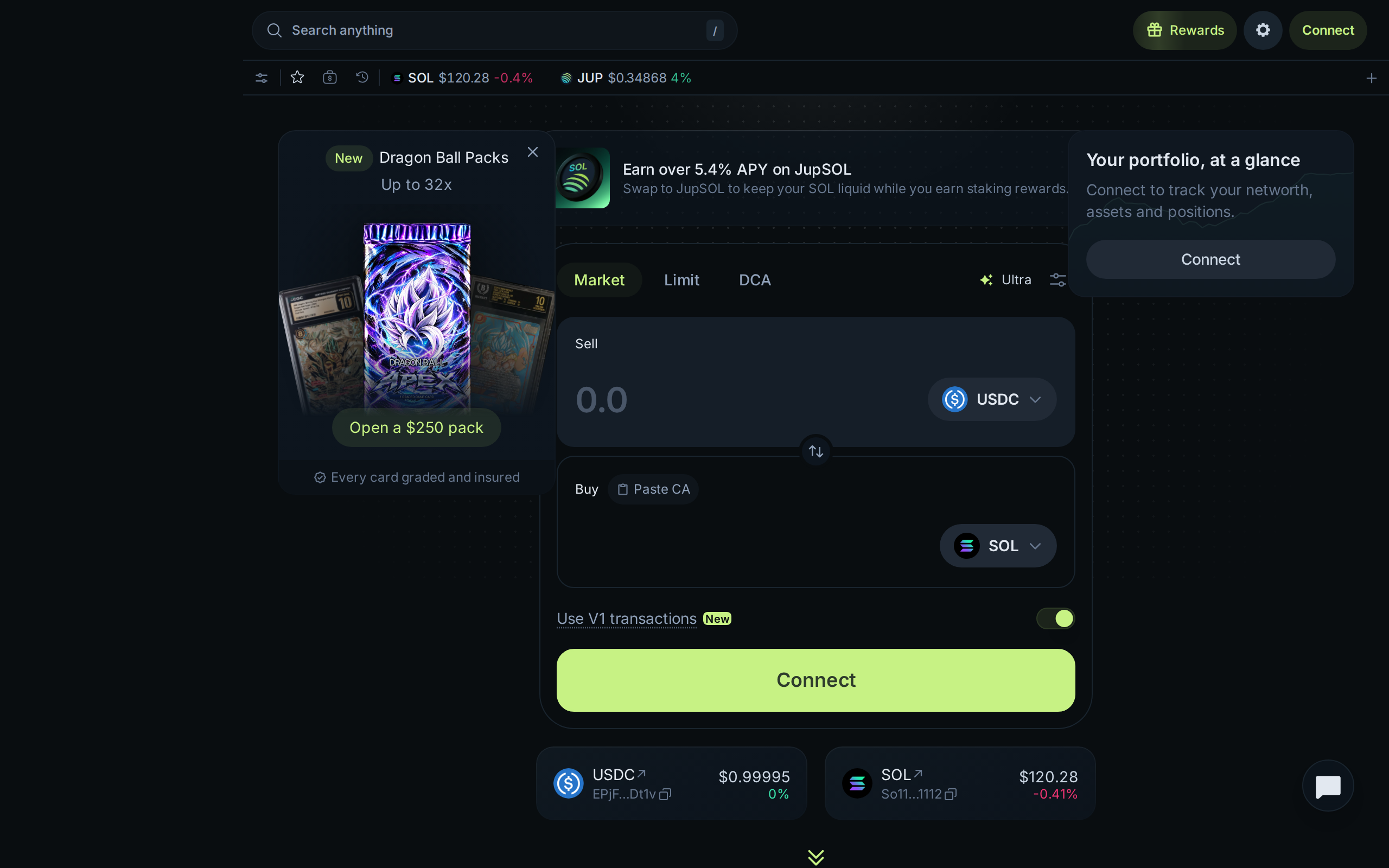
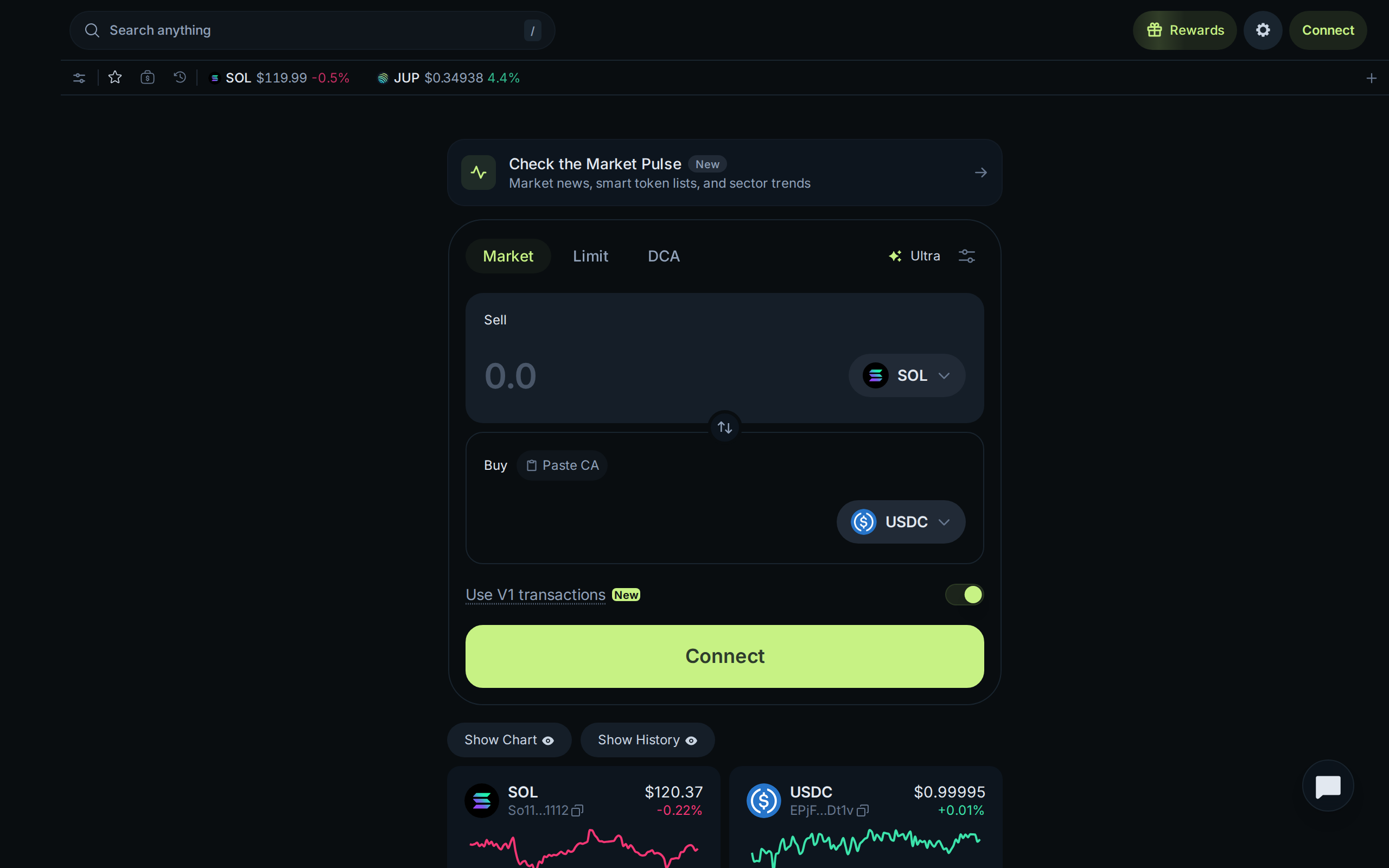
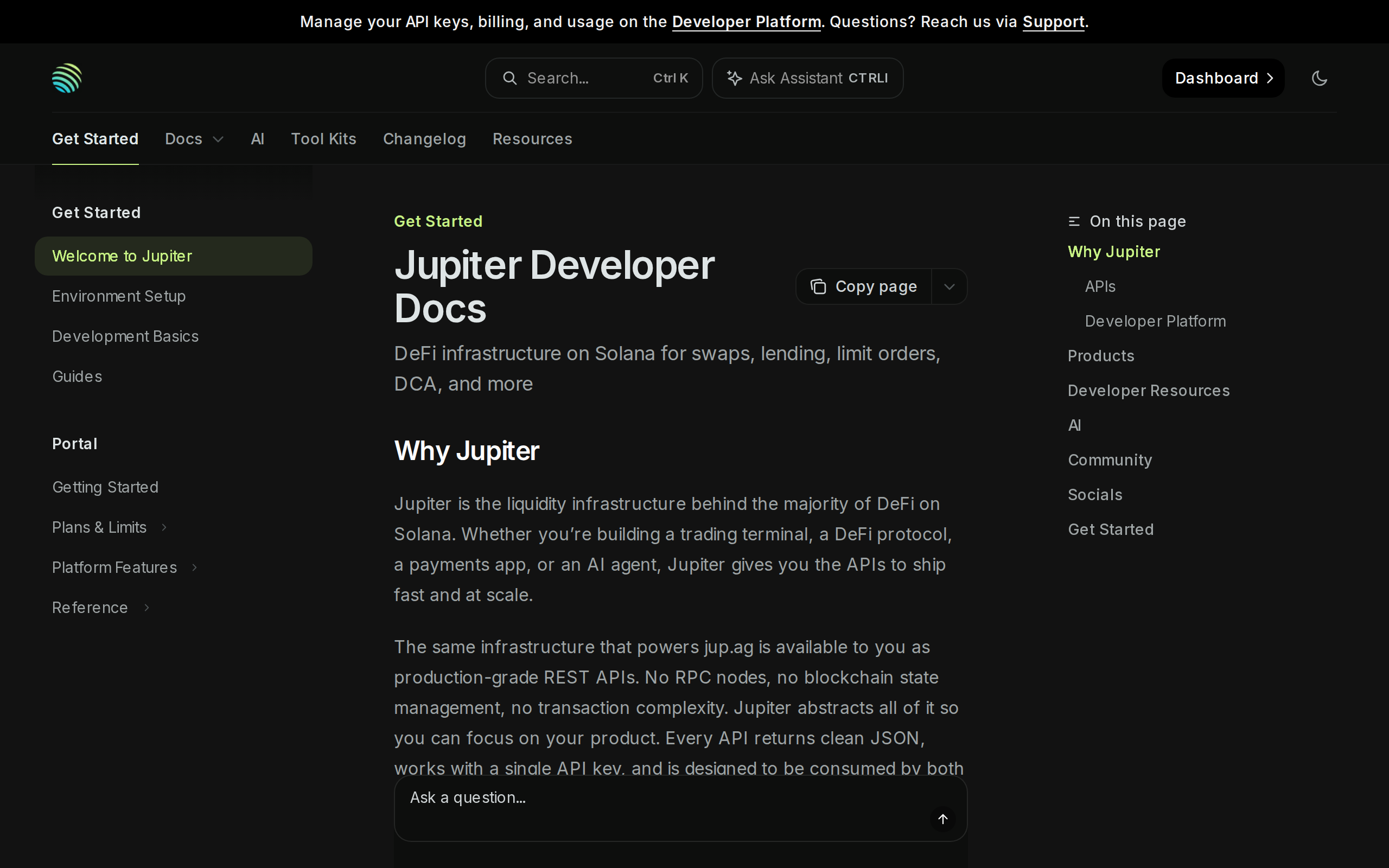
Solana liquidity is scattered across many pools and market makers. A single venue rarely has the best price for every token pair, so an aggregator that checks several at once is worth more than any one of them. Jupiter's developer docs describe it plainly: its own Metis router, JupiterZ and third-party routers compete on every swap, and the winner fills you.
You connect a wallet, pick two tokens and sign. Jupiter never takes custody. That removes the counterparty risk of a centralized exchange, and it hands you the risk that comes with any wallet: a bad signature or a fake site costs real money.
What a swap costs
Jupiter is free to use, but a swap is not free. An independent CryptoSlate review puts the Ultra commission between 0 and 0.5% depending on the pair, with SOL against stablecoins near 0.02% and some pairs at nothing. Manual swaps carry no Jupiter commission but skip the execution support Ultra gives you. On top of that sit network and priority fees paid to Solana, which are small per transaction but vary with congestion.
For a plain swap of a major token the cost is lower than most centralized exchange retail screens. For a thinly traded memecoin, the real cost is price impact and slippage, and no router can fix a pool with no depth. Read the quote screen before you sign.
Limit orders and DCA: useful, with a catch
The limit order page shows the idea in one example: set a target, such as selling at $110 when the market is at $100, and the order fills at that price or better, possibly in parts. That saves you from watching a chart.
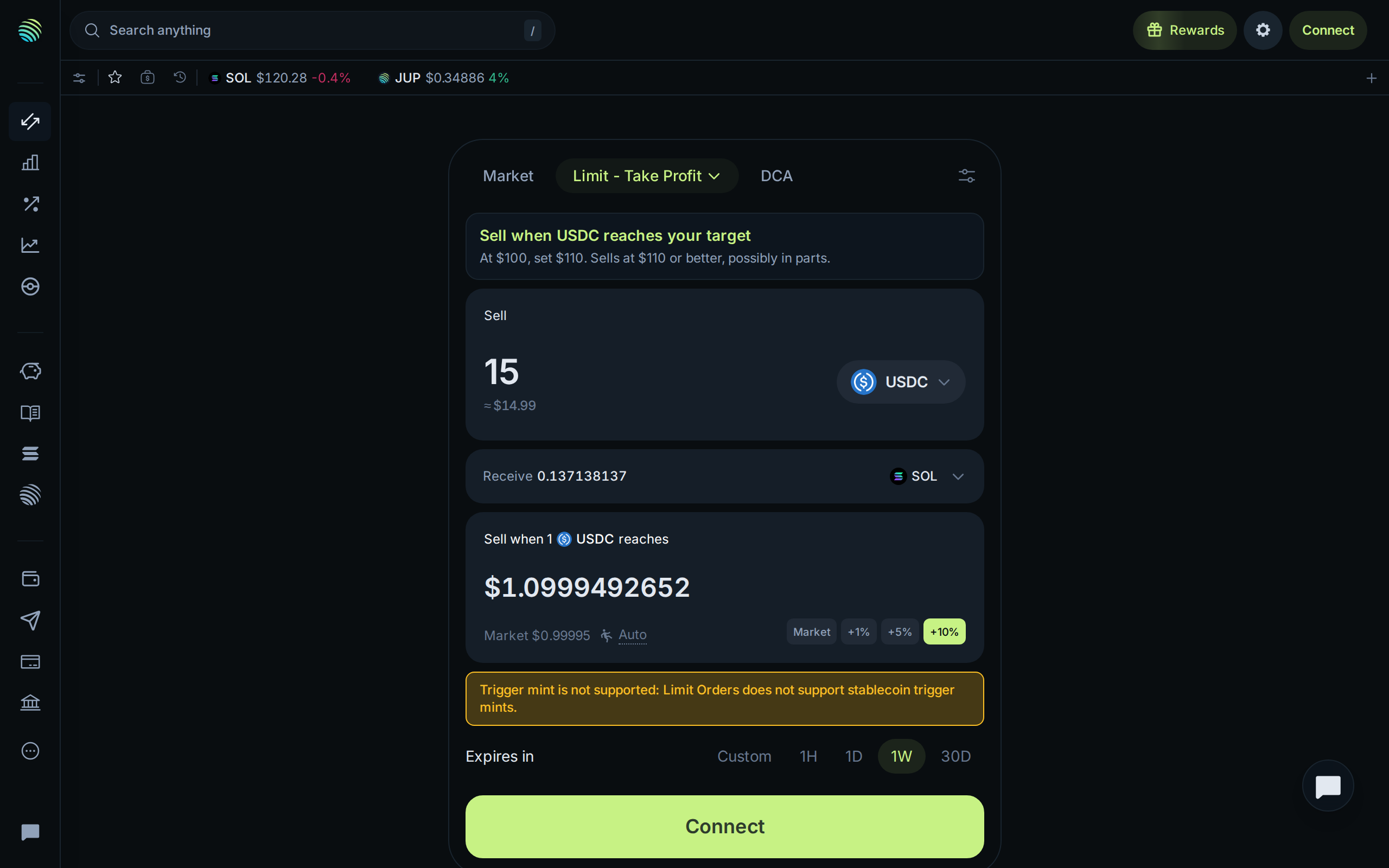
The catch is that an order lives on-chain until something fills it. A partial fill can leave you holding some of each token. Check the order history rather than assuming a target was hit. DCA, which spreads a buy over time, is a calmer way to use the same machinery.
The perps tab is a different risk class
Jupiter Perps lets you go long or short on SOL, ETH and wBTC. CryptoSlate reports a maximum opening leverage of 250x. The open and close fee is 0.06% of position size according to a third-party fee guide, and a price impact fee applies on large trades. While a position is open you pay an hourly borrow rate that rises when the pool is heavily used.
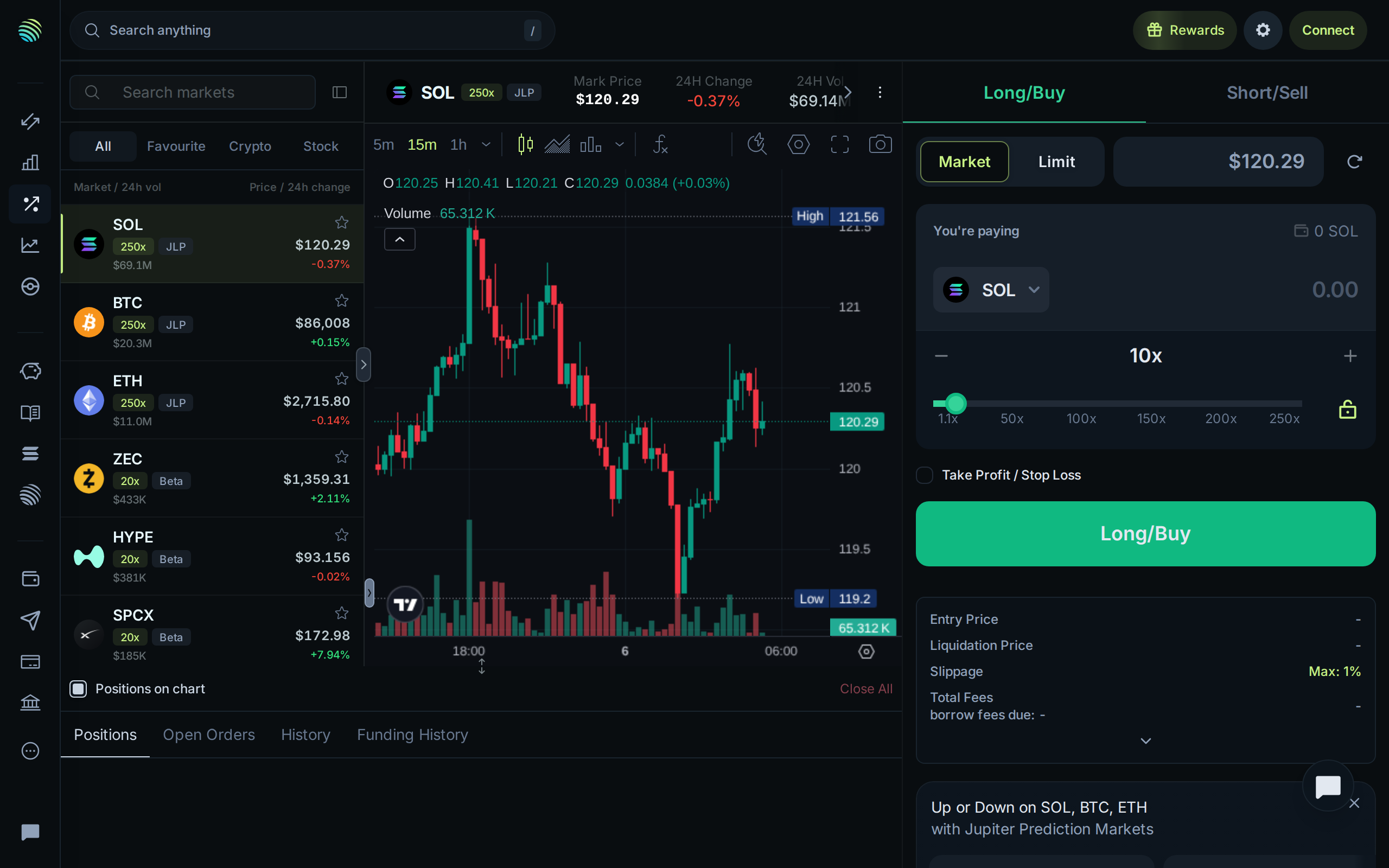
The liquidity comes from JLP holders, who act as the counterparty. Jupiter says JLP earns 75% of the fees. Jupiter's own post announced that share along with a cut in the open and close fee to 0.07% at the time, and the current fee may have moved since. JLP is not a stablecoin: if traders win, the pool pays them, and JLP's price falls with it.
We are not saying never use perps. We are saying a 250x position is closer to a lottery ticket than a trade, and the hourly borrow fee quietly taxes anyone who holds for weeks. Size small, and use the tool only with money you can lose.
Trust and security record
Jupiter's main X account was compromised in February 2025 and used to push malicious promotions, according to CryptoSlate. The team recovered it, but the lesson stands: do not follow a link from a social post, and bookmark the real site. Wallet-draining fakes of aggregators are common. The same review notes that connecting one wallet does not give swaps, lending and perps identical withdrawal rights, so read each product's rules.
Who should use it
Use Jupiter if you trade Solana tokens, you already hold a Phantom-style wallet and you want the best quote without leaving the chain. Skip it if you trade mostly outside Solana, if you want fiat on-ramps and customer support, or if you are tempted by high leverage on a hunch. Nothing here is advice on what to trade.
Verdict
As a swap router, Jupiter is hard to beat on Solana, and we rate it that way. Marks come off for the Solana-only scope, product-by-product rules and a perps tab whose headline leverage invites the wrong behaviour.
Specifications
- Type
- Solana swap aggregator and DeFi hub
- Custody
- Non-custodial (wallet signs)
- Swap commission
- 0 to 0.5% by pair on Ultra; none on manual swaps
- Perps open/close fee
- 0.06% of position size, plus price impact
- Perps leverage
- Up to 250x
- Perps markets
- SOL, ETH and wBTC
- Other products
- Limit orders, DCA, JupSOL staking, lending
- Developer API
- Metis, JupiterZ and third-party routers
As published by Jupiter when we tested it.