Hyperliquid Review: An On-Chain Perps Exchange That Trades Like a Centralized One
Hyperliquid runs a full order book on its own chain at 0.015% maker and 0.045% taker. We checked the speed claims, the fee ladder and the market-manipulation incidents that exposed its risks.
The verdict
Hyperliquid is the first on-chain exchange that feels like a centralized one: an order book, sub-second feedback and fees below most major venues. The trade-off is risk. Leverage can wipe out an account fast, the liquidity vault has been targeted by price manipulation, and the protocol is young. It suits experienced perp traders, not beginners.
Best for Experienced perp traders who want self-custody and low fees
Pros
- Perp fees of 0.015% maker and 0.045% taker at the base tier
- Full on-chain order book with about 200,000 orders per second claimed
- No sign-up or KYC: connect a wallet and deposit USDC
- Staking discounts of 5% to 40% and small maker rebates at higher volume
Cons
- Repeated manipulation of thin markets, such as JELLY and POPCAT, has hit the HLP vault
- Leverage up to 40x on some assets liquidates small accounts quickly
- Validator set is small and the protocol is young, so smart-contract and governance risk is real
- Terms and local law may bar you from using it, and no consumer protection exists
The usual trade-off with decentralised exchanges is blunt: you get custody, and you lose speed. Order books on-chain were too slow, so most DEXs moved to automated pools, and perpetual traders stayed on centralised venues. Hyperliquid is the project that tried to remove the trade-off, and it has come closer than anyone else.
It has also shown, more than once, that matching a centralised exchange on speed means inheriting its worst risks, without a company standing behind you.
How it gets its speed
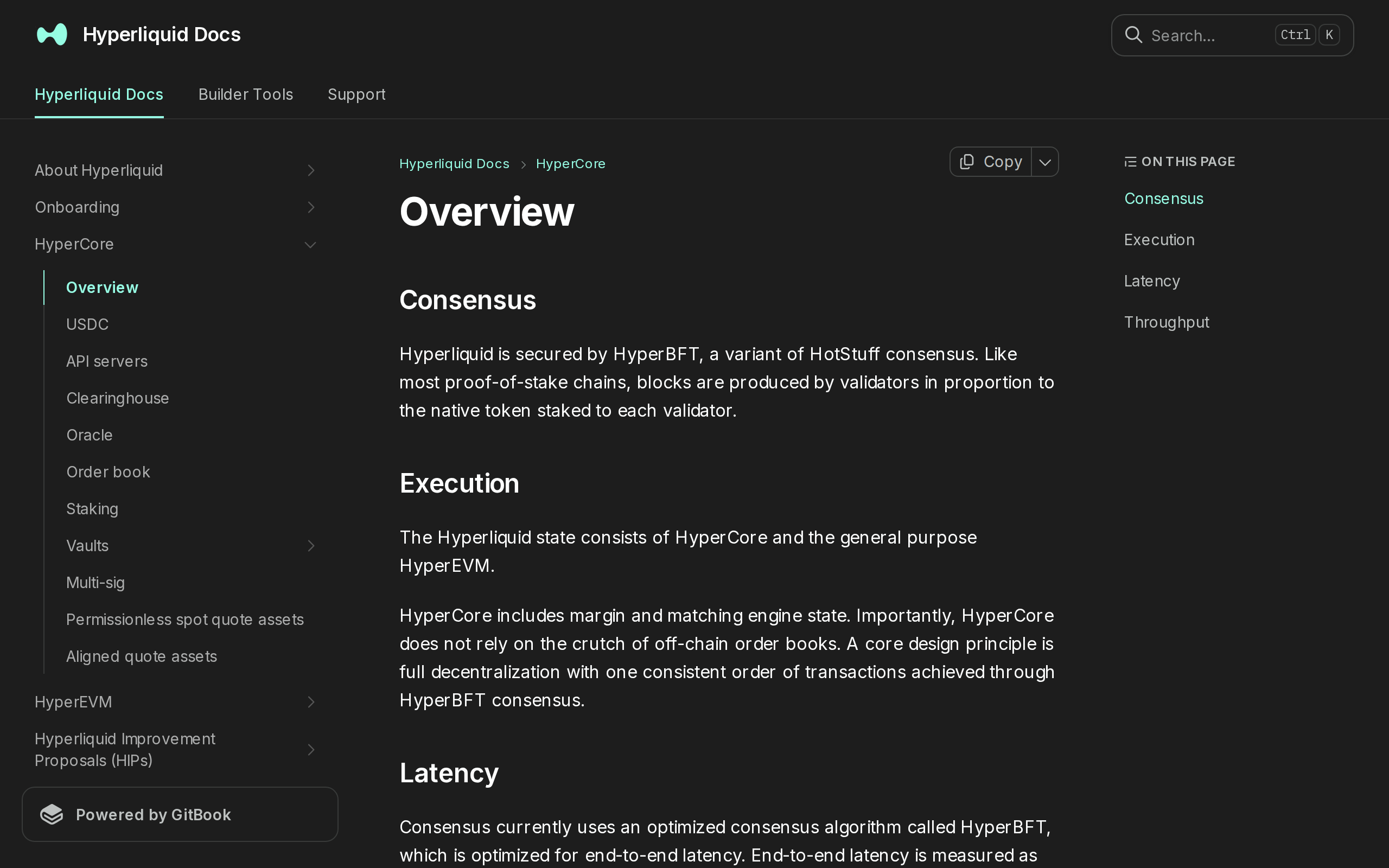
Hyperliquid runs its own layer 1 chain. Its trading engine, HyperCore, keeps a complete order book on-chain and reaches consensus with HyperBFT, a variant of HotStuff. The documentation claims around 200,000 orders per second on mainnet and, from a co-located client, a median latency of 0.2 seconds with a 99th percentile of 0.9 seconds.
Those are the project's own numbers, so take them as claims. They are credible in practice: the interface responds like a centralised exchange, and orders settle without a wallet pop-up for each click once you approve an API-style trading key.
Fees: cheap, and cheaper with volume
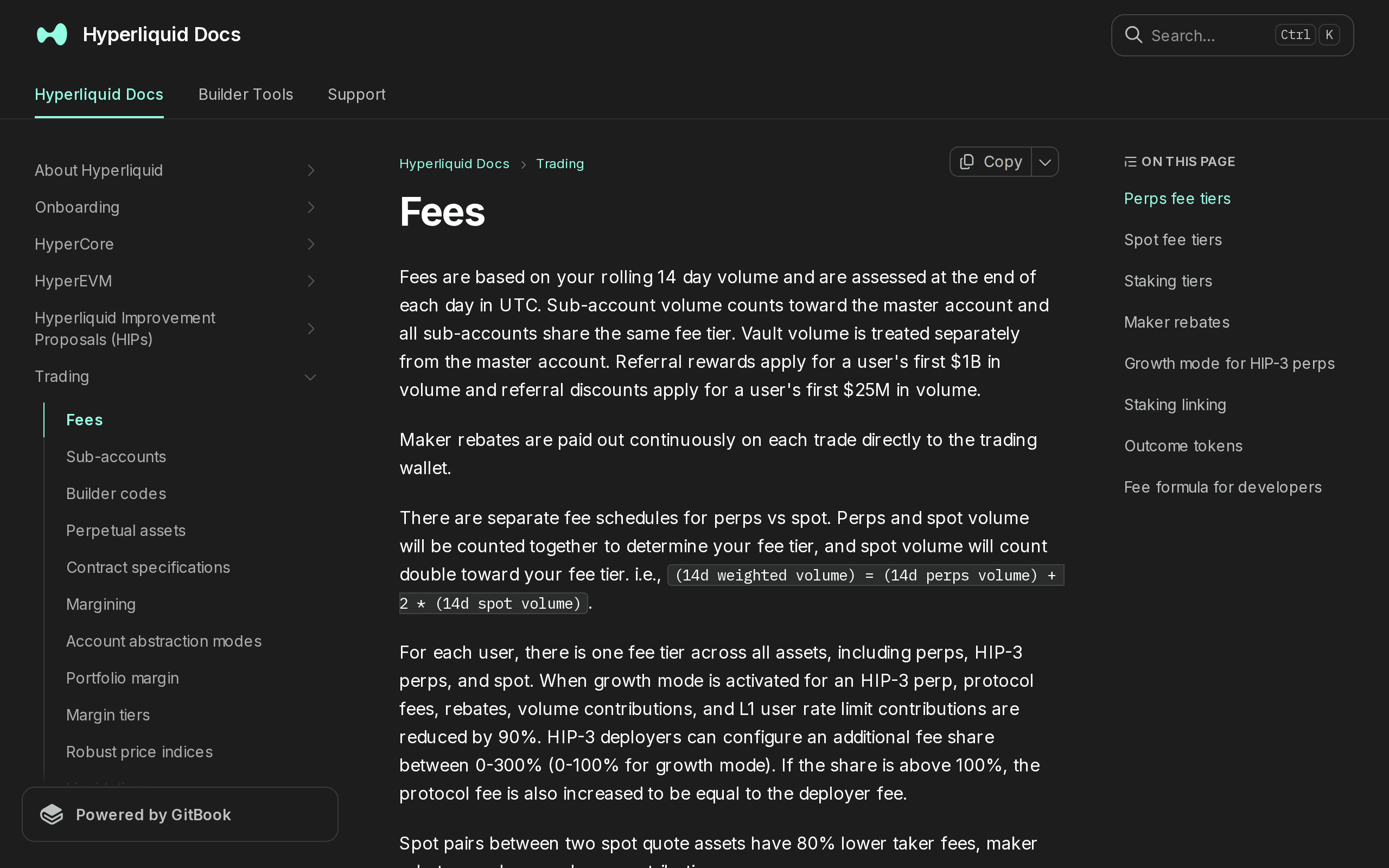
Base tier perpetual fees are 0.015% for makers and 0.045% for takers. Spot starts at 0.040% maker and 0.070% taker. Those perp rates undercut the entry tiers of Coinbase and many global exchanges. Tier 1 begins at $5 million of 14-day volume, and spot volume counts double towards your tier.
Holding and staking the HYPE token earns discounts from 5% for more than 10 HYPE up to 40% at the diamond level of over 500,000. Large makers can even earn a small rebate, starting at -0.001%.
Hidden costs exist elsewhere. Funding rates on perpetuals move with positioning and can matter more than the trade fee on a position held for days, and bridging USDC in and out carries the network fee of the chain you use.
Where the risk really sits
Liquidation is the first one. An account is liquidated when equity falls below the maintenance margin, which the docs set between 1.25% for 40x assets and 16.7% for 3x ones. If the order book cannot absorb the closing orders, a backstop liquidation hands the position to the liquidator vault.
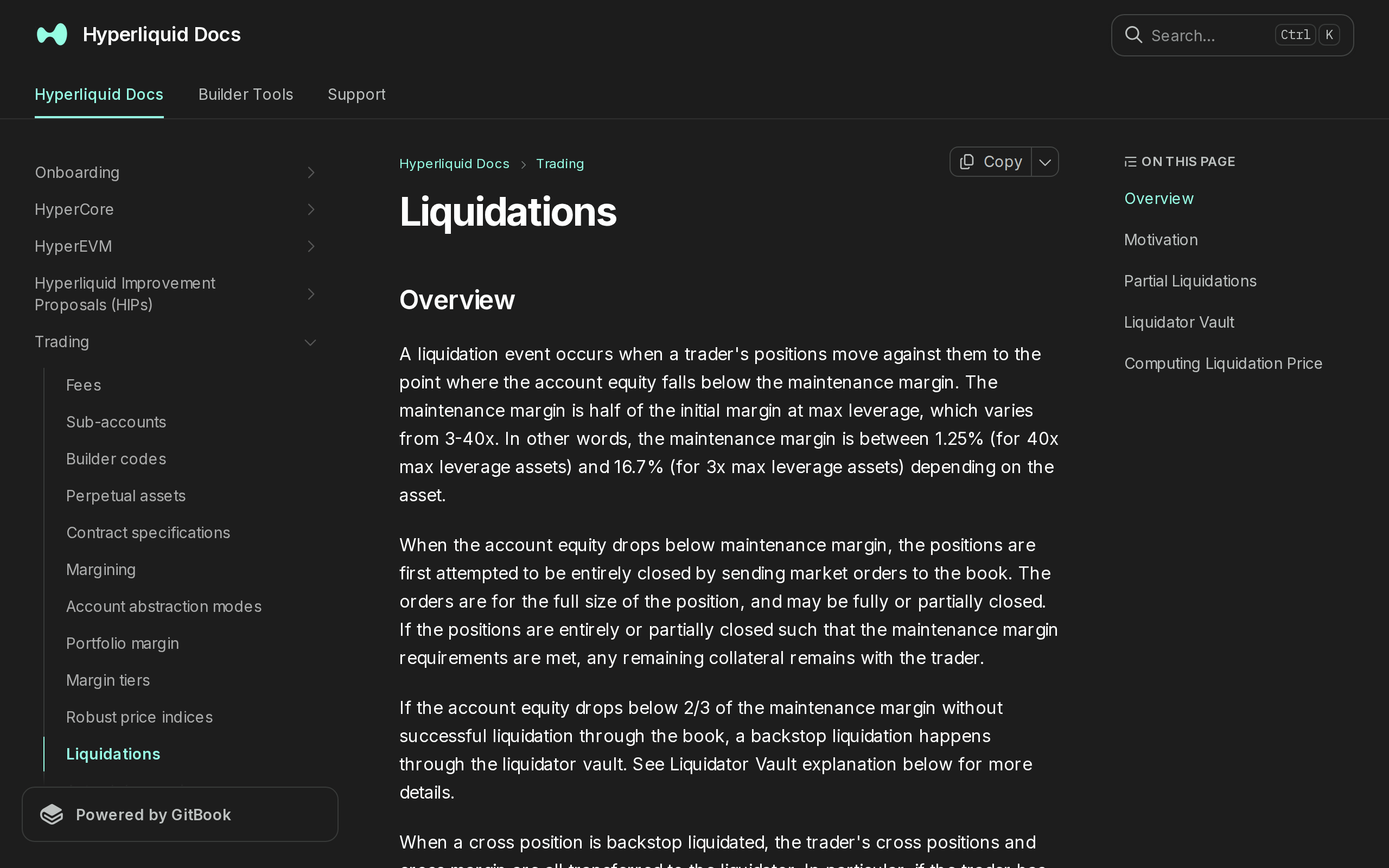
That vault is where Hyperliquid's design shows its edge. Liquidation profits flow to depositors in HLP, the community liquidity vault, rather than to the exchange. It is an elegant idea and also a standing target.
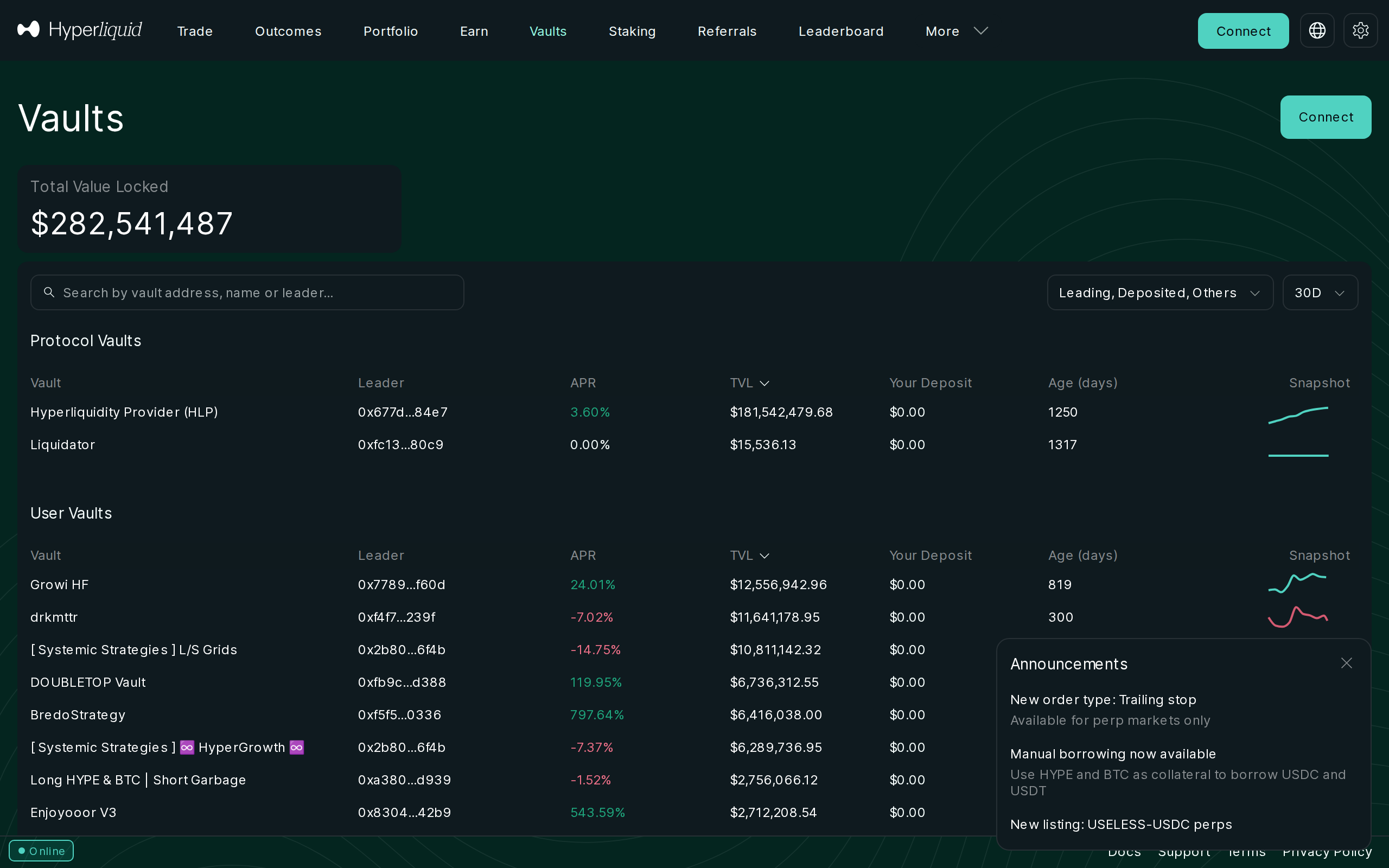
In March 2025 a trader manipulated the thin JELLY market and pushed an unrealised loss of about $13.5 million onto HLP. Later reports describe another manipulation in November 2025 involving POPCAT and a further incident in April 2026. Vault deposits have fallen from a peak of about $604 million to roughly $184 million, according to DataWallet. The pattern is that thinly traded assets with high leverage are the weak point.
Using it safely, if you decide to
Margining options also matter: cross margin shares collateral across positions, while isolated margin ring-fences it.

Start with isolated margin and low leverage. Stick to the liquid markets. Treat vault deposits as risk capital, because a vault is a strategy and not a savings account. Keep your signing wallet on a hardware device, and check that your jurisdiction permits you to use the platform, because there is no regulator and no customer service to appeal to.
What it is not
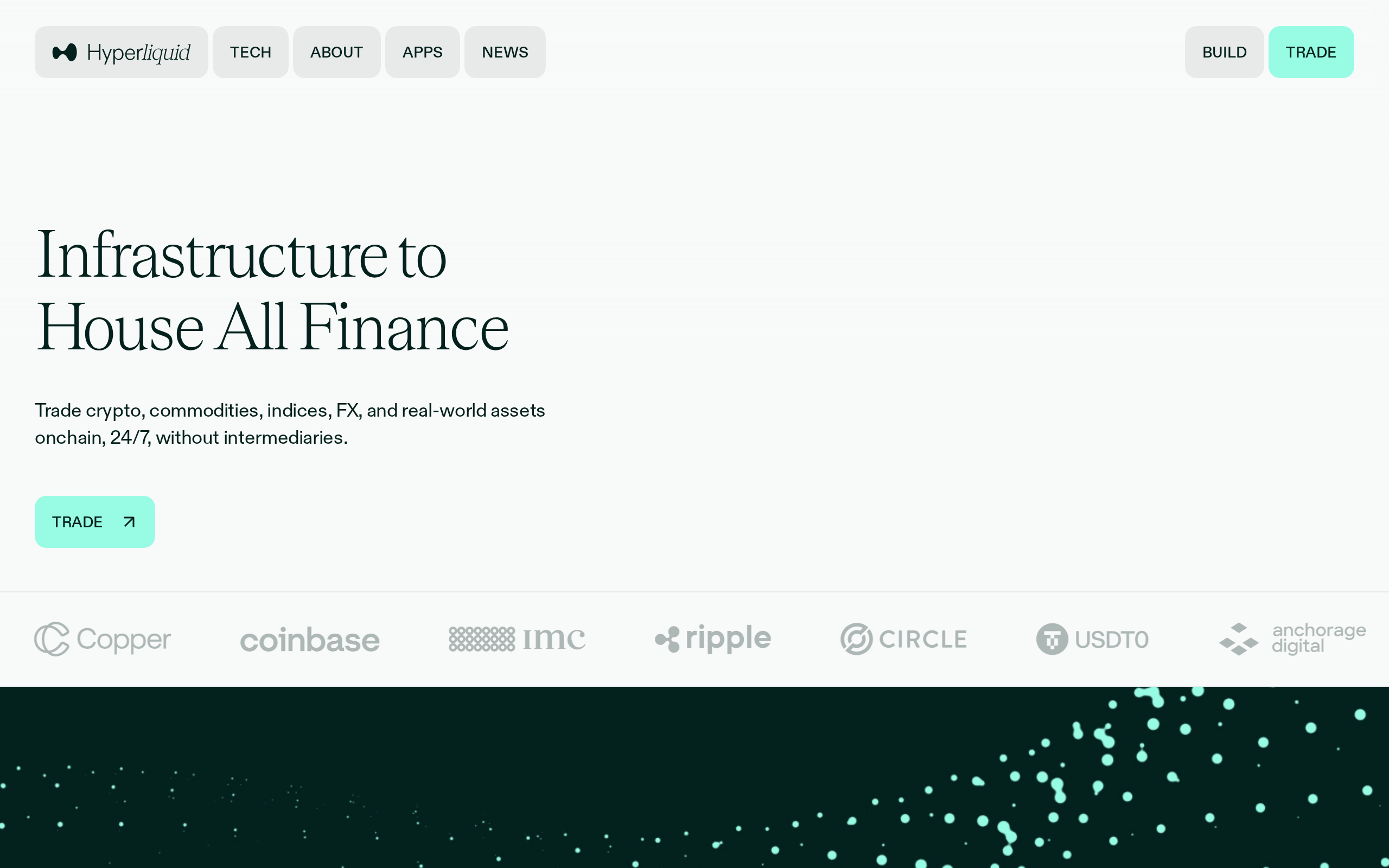
Hyperliquid is not a general-purpose exchange. There is no card on-ramp, no fiat deposit and no tax reporting, so you arrive with USDC from elsewhere and keep your own records. The project has also moved beyond crypto pairs, and its homepage now advertises commodities, indices and FX markets onchain, which adds more thinly traded contracts to watch.
Who controls upgrades, how validators are chosen and how the HYPE token is distributed all affect your risk, and the documentation is the place to read about each one before you commit serious size. Do that reading first, not after a bad day on the book.
Verdict
Hyperliquid is good engineering with a thin safety net. If you already trade perpetuals, it offers lower fees, self-custody and a venue with real depth on the main pairs. If you are new to leverage, an on-chain exchange is the wrong place to learn, and nothing here is a suggestion to trade.
Specifications
- Perp fees (tier 0)
- 0.015% maker / 0.045% taker
- Spot fees (tier 0)
- 0.040% maker / 0.070% taker
- Consensus
- HyperBFT, a HotStuff variant
- Throughput
- About 200,000 orders per second (docs)
- Latency
- Median 0.2 s, 99th percentile 0.9 s (co-located)
- Max leverage
- Up to 40x on some assets
- Staking discount
- 5% to 40% by HYPE staked
- Custody
- Self-custody wallet; no account or KYC
As published by Hyperliquid Labs when we tested it.