Base App Review: A Self-Custody Wallet That Dropped Its Social Feed and Is Coinbase Wallet Again
The Base app spent a year as a social wallet, then reverted to the Coinbase Wallet name in September 2026. We assess it as self-custody software: what you hold, what swaps cost and what the social experiment left behind.
The verdict
As a wallet, Base App is solid: you hold the keys, setup takes minutes and it now reaches 11 networks. As a product it has been unsettled. Coinbase spent a year pushing social features, then dropped them and restored the Coinbase Wallet name in September 2026. Fees on swaps are not clearly published and may reach 1%. Treat it as a capable trading wallet, not a vault.
Best for Coinbase users who want a free self-custody wallet with built-in trading
Pros
- Self-custodial: Coinbase says users hold the keys and cannot freeze the wallet
- Reaches 11 networks including Bitcoin, Ethereum, Solana, Base and BNB Chain
- Passkey sign-in or an encrypted iCloud or Google Drive backup of the phrase
- Perps, tokenized stocks and prediction markets sit inside one app
- Automatic scam and malicious token detection is built in
Cons
- The social, mini-app and creator features were removed after a year
- Swap fees are not clearly published and reports put them at up to 1%
- Keys on a phone are a hot wallet, so large holdings belong on hardware
- Some features are regionally limited, and the name has changed twice since 2025
- Perps and tokenized stocks add leverage and counterparty risk to a wallet
First, the name. The app we are reviewing launched in July 2025 as the Base App, replacing Coinbase Wallet. In September 2026 Coinbase reversed the change and gave the product its old name back. The address base.app still serves it, and its sign-in page still says "Welcome to Coinbase Wallet". Same software, same keys, three names in two years.
That history is the answer to the question in the brief. Was this a self-custody wallet or mainly a social app? For a year it tried to be both. Coinbase's chief executive said in March 2026 that the social experiment "didn't quite work", and the social feed, messaging, mini-apps and creator tools have now gone. What remains is a trading wallet.
What you are left with
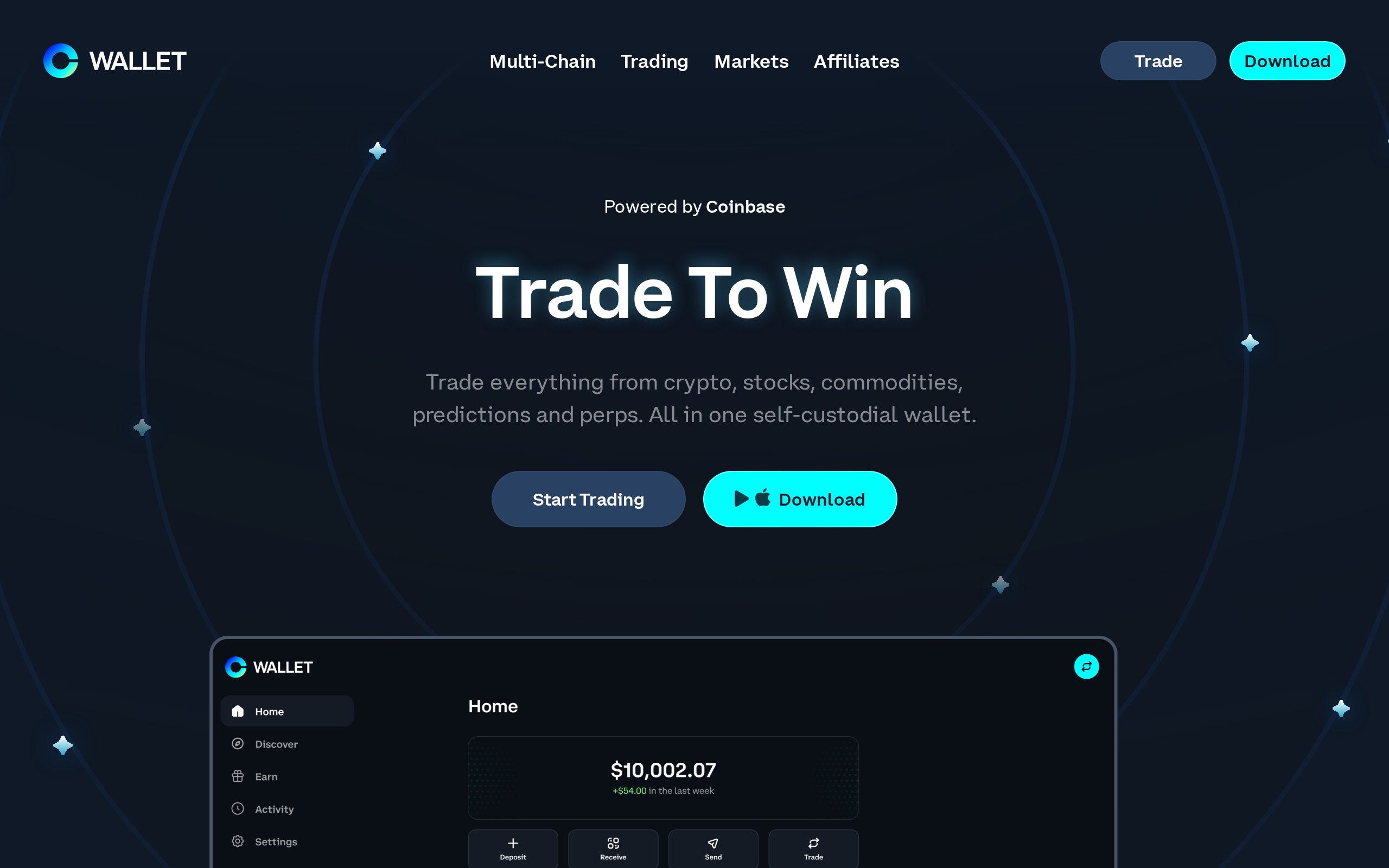
The homepage today leads with "Trade To Win" and calls the product an all-in-one self-custodial wallet for crypto, stocks, commodities, predictions and perps. The featured picture above is that page.
Reports on the relaunch list 11 networks: Base, Bitcoin, Ethereum, Solana, BNB Chain, Arbitrum, Optimism, Polygon, Avalanche, Robinhood Chain and Monad. Bitcoin and Solana support is the notable part, because the older Coinbase Wallet was mostly an Ethereum-family tool. Perpetual futures run on Hyperliquid's engine, and there are tokenized stocks and prediction markets.
We read that list as ambition outrunning discipline. A wallet that also sells leverage is two products with different risk profiles, and the second one can lose you money in minutes.
Custody: genuinely yours, with two ways to lose it
Self-custody means the private key lives on your device. Coinbase cannot move or freeze the funds, and it cannot reverse a mistake. Recovery comes in two flavours, per Coinbase's help page and independent reviews: a passkey for seedless sign-in, or a recovery phrase with an encrypted backup in iCloud or Google Drive, protected by a password you set.
Both shift the risk, they do not remove it. The passkey route ties you to a phone ecosystem and to a recovery key you must create while the original passkey still works. The cloud route is only as strong as the backup password you chose and the account that holds the file. Writing the phrase on paper is still the plain option.
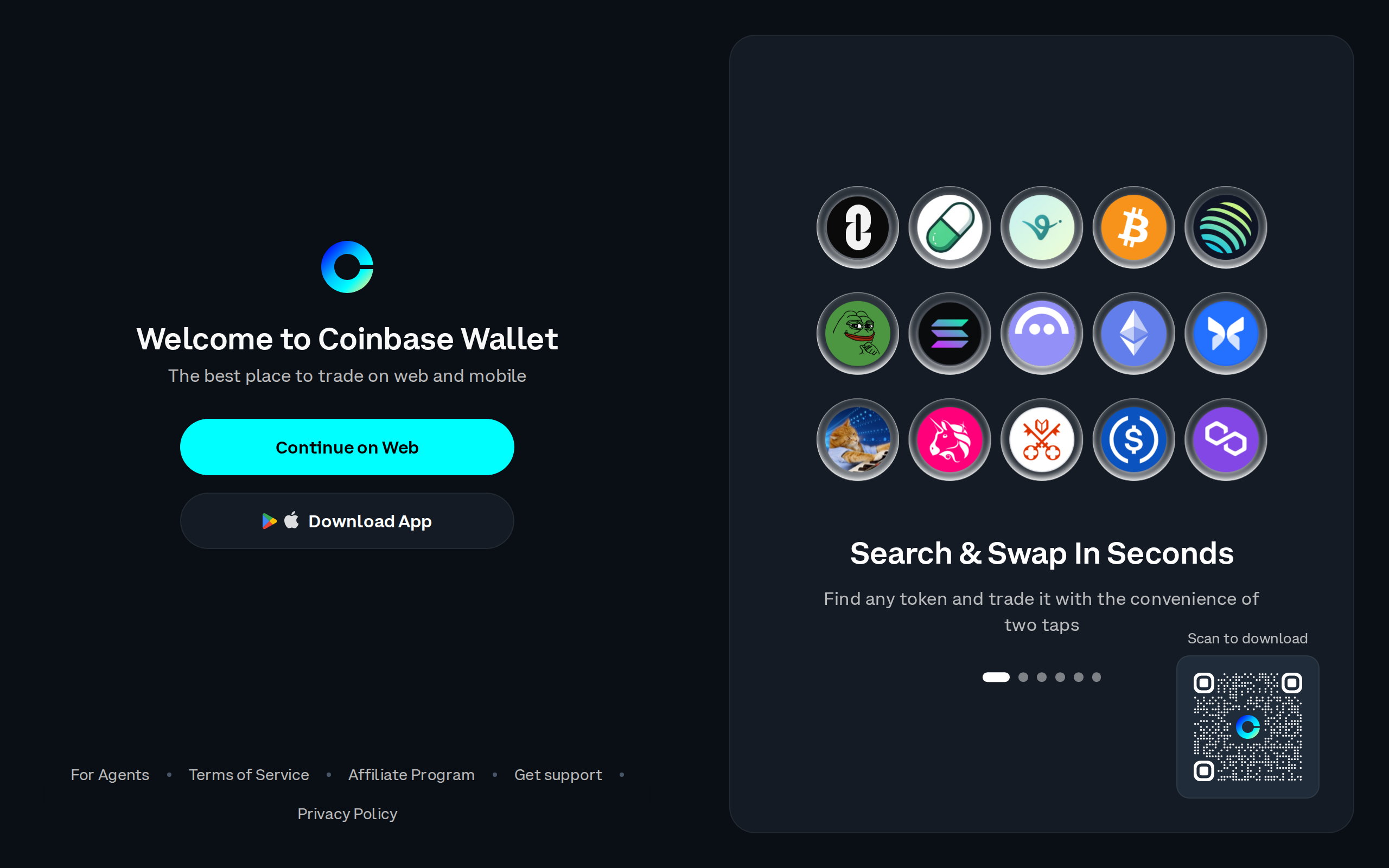
Onboarding is quick by design. The marketing says "no KYC, no waiting, and no borders", and some products are restricted by region. A wallet that skips identity checks is not unusual, since you never hand Coinbase your funds. It does mean the usual exchange protections, such as support reversing a mistaken withdrawal, do not exist.
The cost problem
Here we have to be straight about a gap. Coinbase does not set out a clear fee table for in-app swaps. Independent reviews, including Coin Bureau, report an app fee of up to 1% on DEX swaps, on top of network gas, aggregator fees and slippage. We could not confirm the exact rate from Coinbase's own pages, so treat 1% as a ceiling reported by others, not a quote.
That is a similar order of cost to other wallets that build a swap into the app, and well above what an exchange limit order would cost. For a small, occasional swap it is tolerable. For repeated trading it adds up, and a hardware wallet paired with a DEX would be cheaper.
Perps are worth a separate warning. Trading leverage inside the same app that holds your savings invites the mistake of posting the wrong collateral. Keep long-term holdings in a different wallet.
Does the Base network connection matter
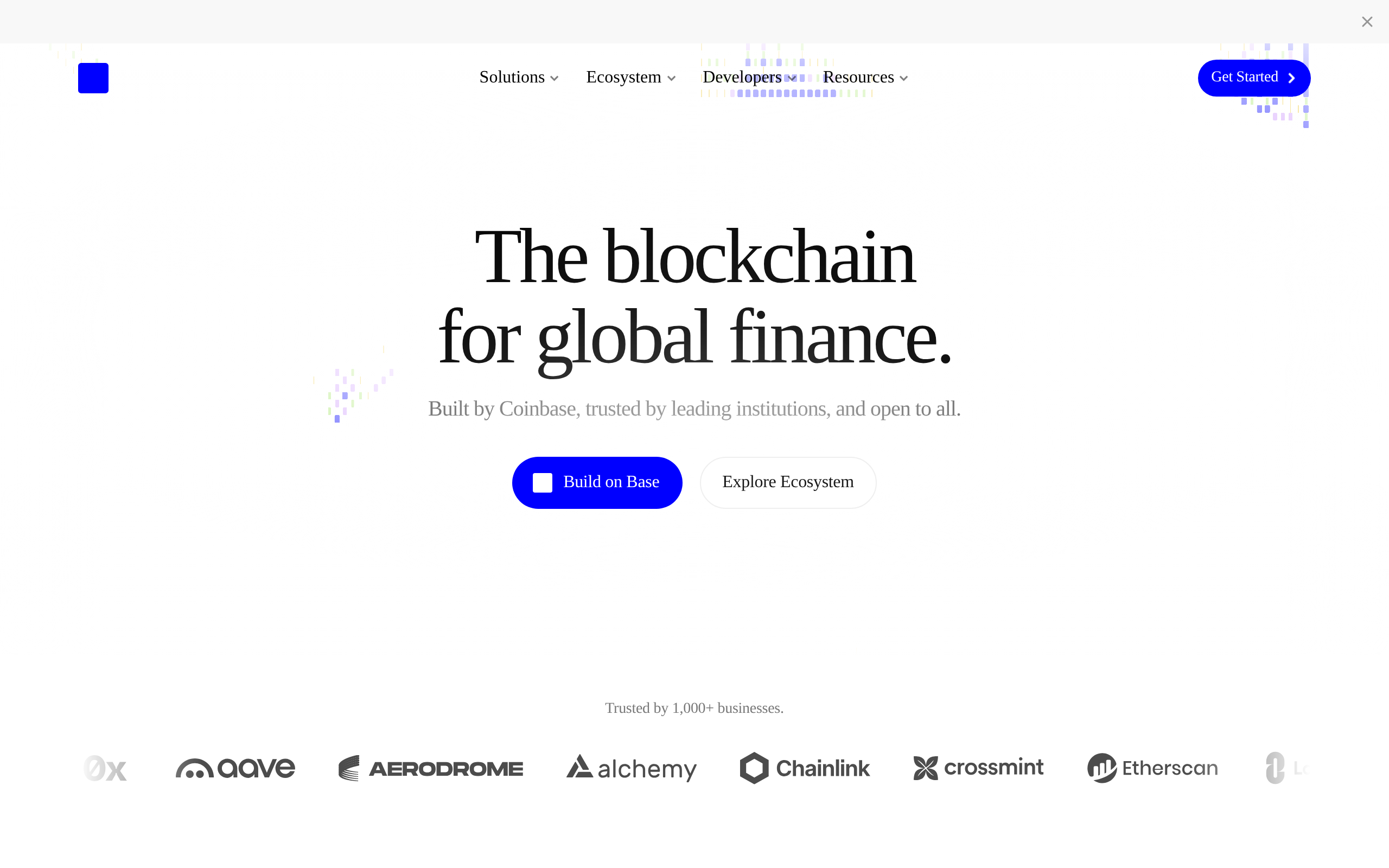
The app was built around Base, Coinbase's own layer-2 network, and the Base site still describes it as "the blockchain for global finance". The new framing is deliberately less Base-centric, according to the people running it. In practice you can ignore the chain politics: Base fees are low, but you are not locked in.
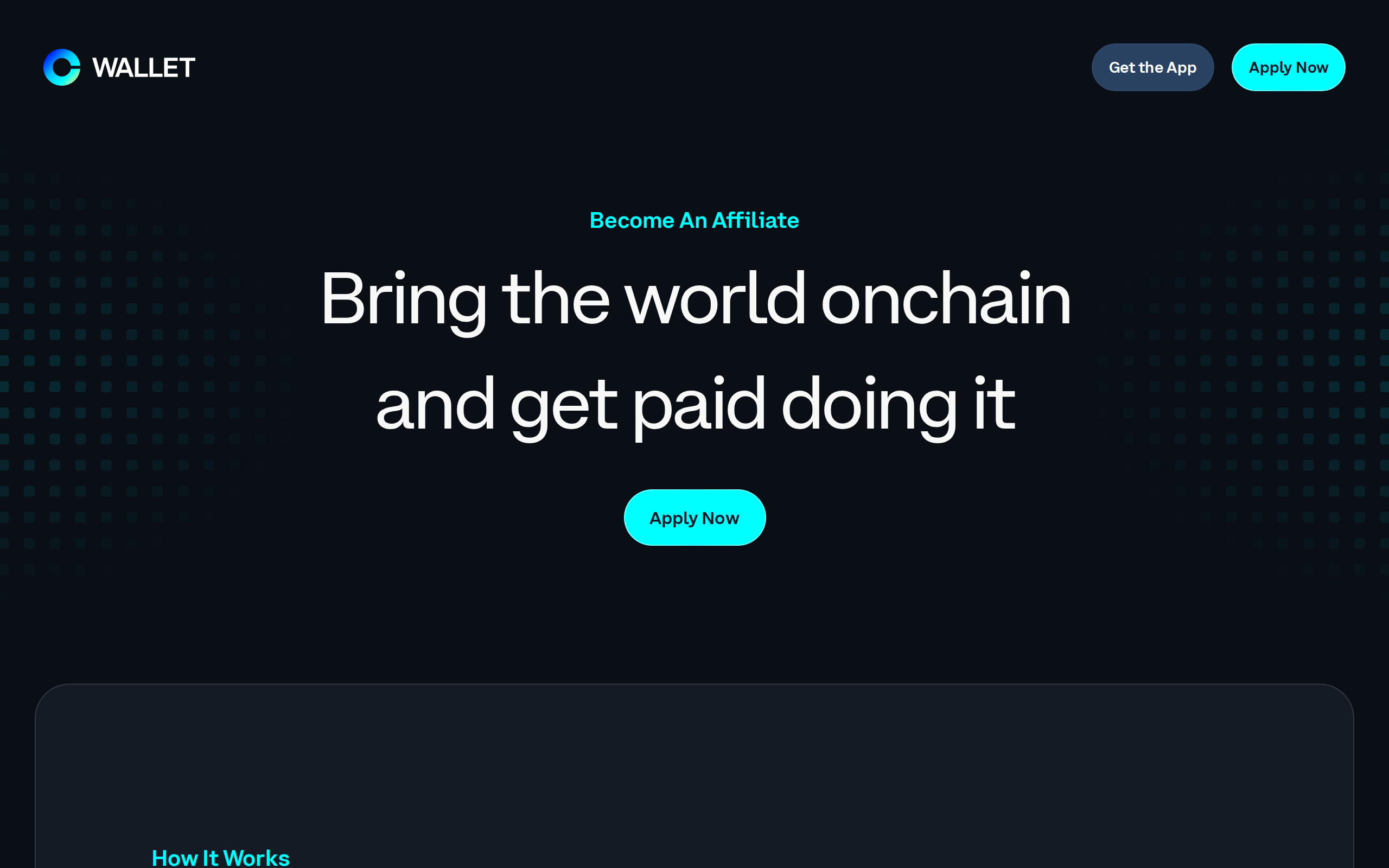
There is also an affiliate programme that pays people who bring others onchain, which tells you where the commercial emphasis lies: volume.
Verdict
As a free self-custody wallet from a listed US company, it earns a reasonable mark. The keys are yours, recovery options are sensible and scam-token filtering helps beginners. We take points off for the churn in naming and features, the unclear swap fee and the bolt-on leverage. This is for people who already live in the Coinbase world and want a trading wallet with a familiar badge. If you hold more than you can afford to lose on your phone, buy a hardware wallet. None of this is investment advice: it is a description of how the software works.
Specifications
- Maker
- Coinbase
- Type
- Self-custody mobile and web wallet
- Current name
- Coinbase Wallet (Base App name used July 2025 to September 2026)
- Networks
- 11, including Base, Bitcoin, Ethereum, Solana, BNB Chain, Arbitrum, Optimism, Polygon, Avalanche, Robinhood Chain, Monad
- Sign-in and recovery
- Passkey or recovery phrase with encrypted cloud backup
- Trading products
- Swaps, perps via Hyperliquid, tokenized stocks, prediction markets
- Swap fee
- Not published in full; reported at up to 1%
- Account opening
- No KYC at signup, some features restricted by region
- Price
- Free to download
As published by Coinbase when we tested it.