OKX Review: A Deep Exchange With a Wallet Built In, and a Compliance Past
OKX pairs a high-liquidity exchange with a non-custodial Web3 wallet covering 130+ chains. We weigh the fee schedule, the wallet, the licences and the $505 million US settlement.
The verdict
OKX is the best fit for active traders who also want to reach on-chain markets from the same login. Fees are competitive, the wallet is broad and reserves are published monthly. The catch is history: OKX pleaded guilty to running an unlicensed US money transmitter and paid about $505 million, so beginners and anyone who weights compliance first should look at a regulated rival.
Best for Active traders who also use DeFi and on-chain tokens
Pros
- Spot maker fees start at 0.08% for ordinary accounts
- OKX Wallet covers 130+ native chains with a built-in DEX aggregator
- Proof of reserves is published monthly using zk-STARK verification
- Holds a MiCA licence in Malta plus other regional registrations
Cons
- Pleaded guilty to US unlicensed money transmission and paid about $505M
- Interface is dense and aimed at traders, not first-time buyers
- Fee tiers depend on volume and assets, so headline rates are not universal
- Availability and product range vary sharply by country
Start with the uncomfortable part, because a review that buries it is not worth reading. OKX's operating entity pleaded guilty to running an unlicensed money-transmitting business in the United States and agreed to pay about $505 million, according to The Block's report. Prosecutors cited more than $5 billion in suspicious transactions. OKX has since returned to the US market, and a compliance consultant oversees it through February 2027.
That is a regulatory fact, not a verdict on the product. It does decide who should read on: if a clean enforcement record is your first filter, a US-regulated rival is the safer pick. If trading depth and an on-chain wallet matter more, keep going.
The pitch: one account, two worlds
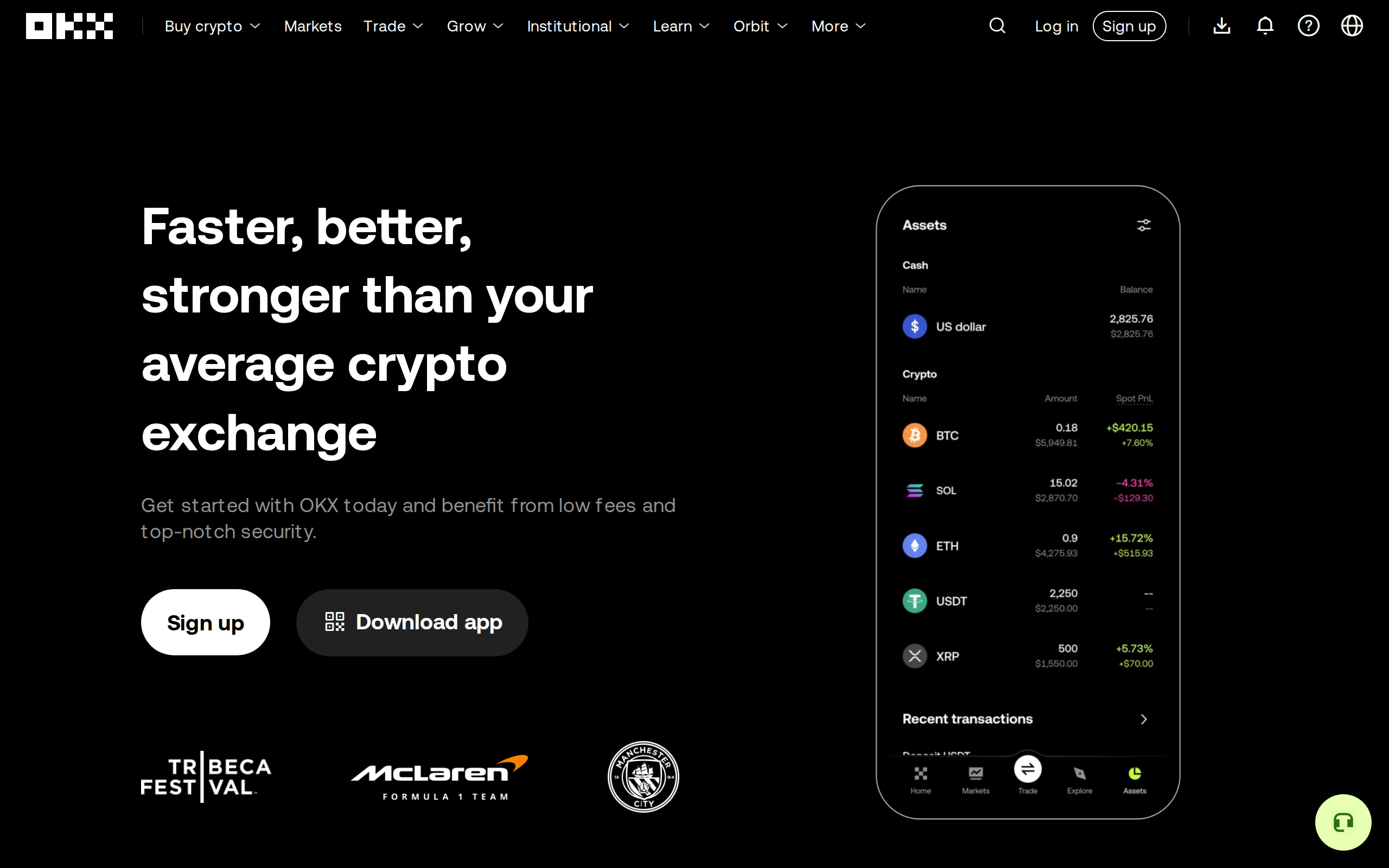
OKX sells itself as the exchange where you can also reach DeFi without leaving. The home page leads with low fees and security claims, and the sign-up path is standard: email, identity checks, then funding.
The landing page promises low fees and top-notch security, which is marketing, so we checked each claim against the fee page, the licence announcements and the reserve reports instead of the slogan.
The more interesting piece is the second product. OKX Wallet is a separate non-custodial app, and the wallet page advertises 130+ native chains. Inside it sit a market view, a meme-token tab, copy-trading style features and a DEX aggregator that routes swaps across on-chain venues.
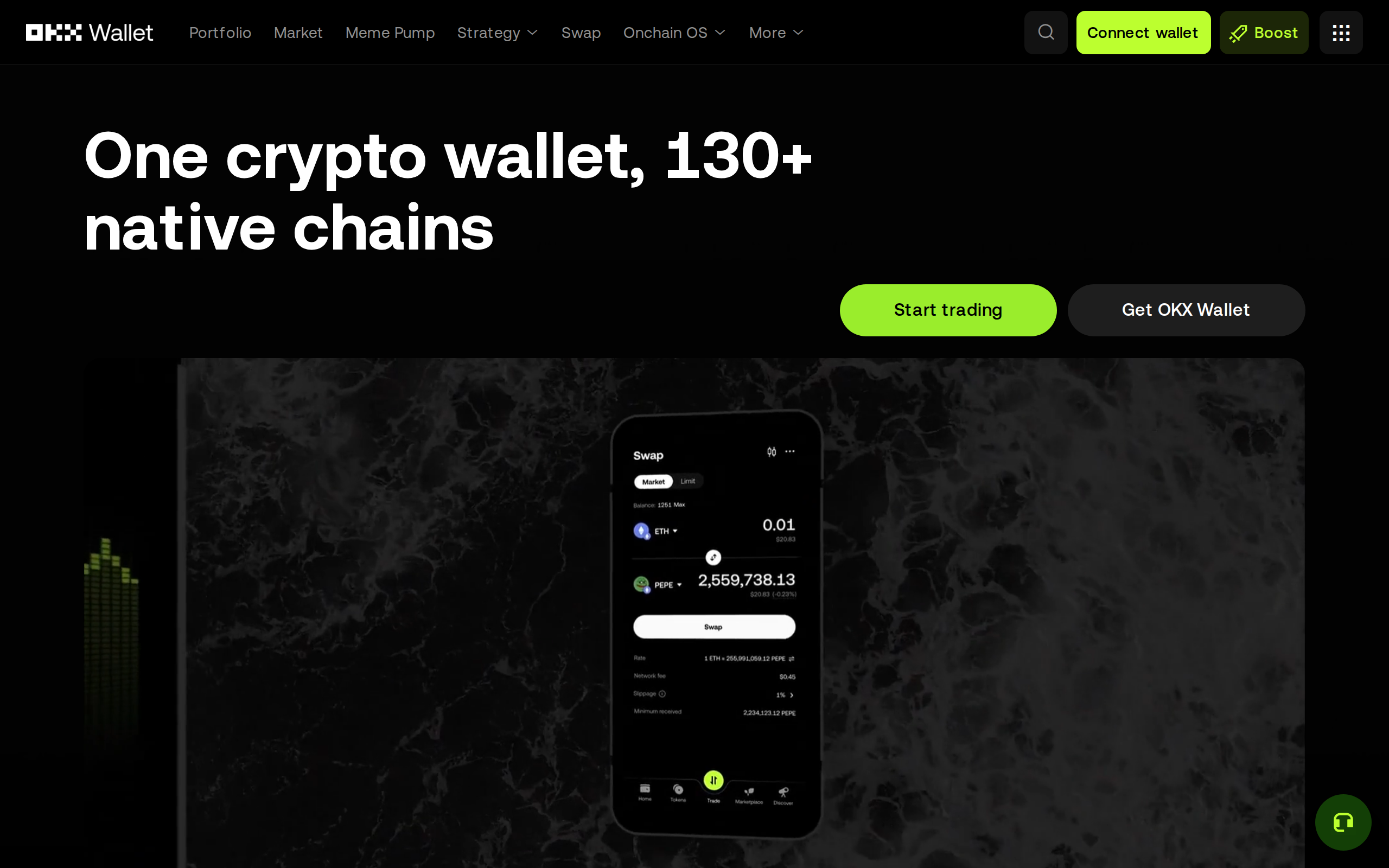
The practical benefit is speed of movement. You can fund from the exchange, send to the wallet and swap an on-chain token without opening a second brand's app. The cost is a risk many users underrate: the wallet keys are yours, so a lost seed phrase cannot be fixed by support.
Fees: read the tier rules, not the headline
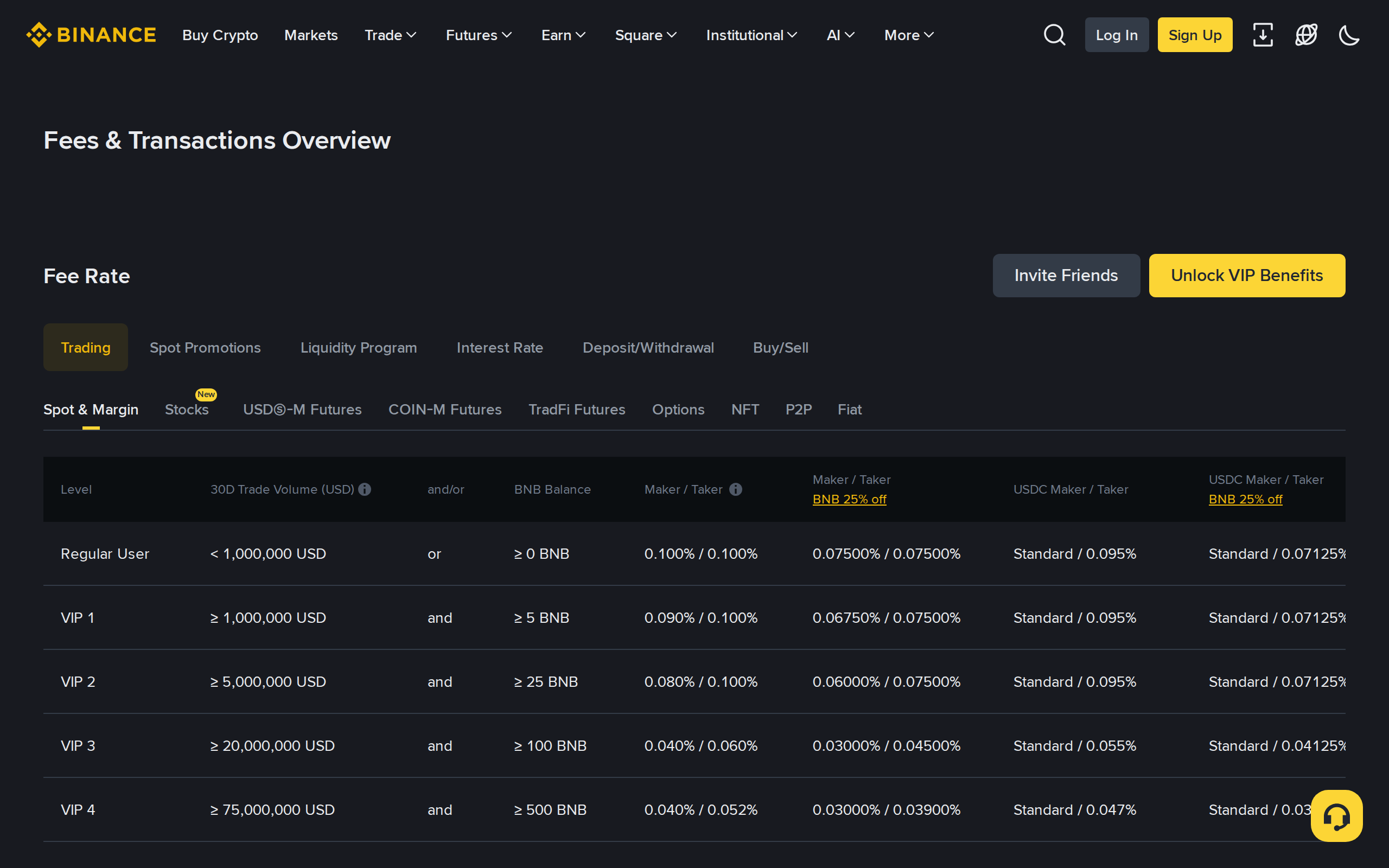
OKX uses regular and VIP levels. According to the fees page, a level comes from deposited assets or 30-day trading volume, and several criteria across instruments can apply. Ordinary accounts start at 0.08% maker on spot, which is well below the 0.40% maker rate Kraken Pro charges at its entry tier.
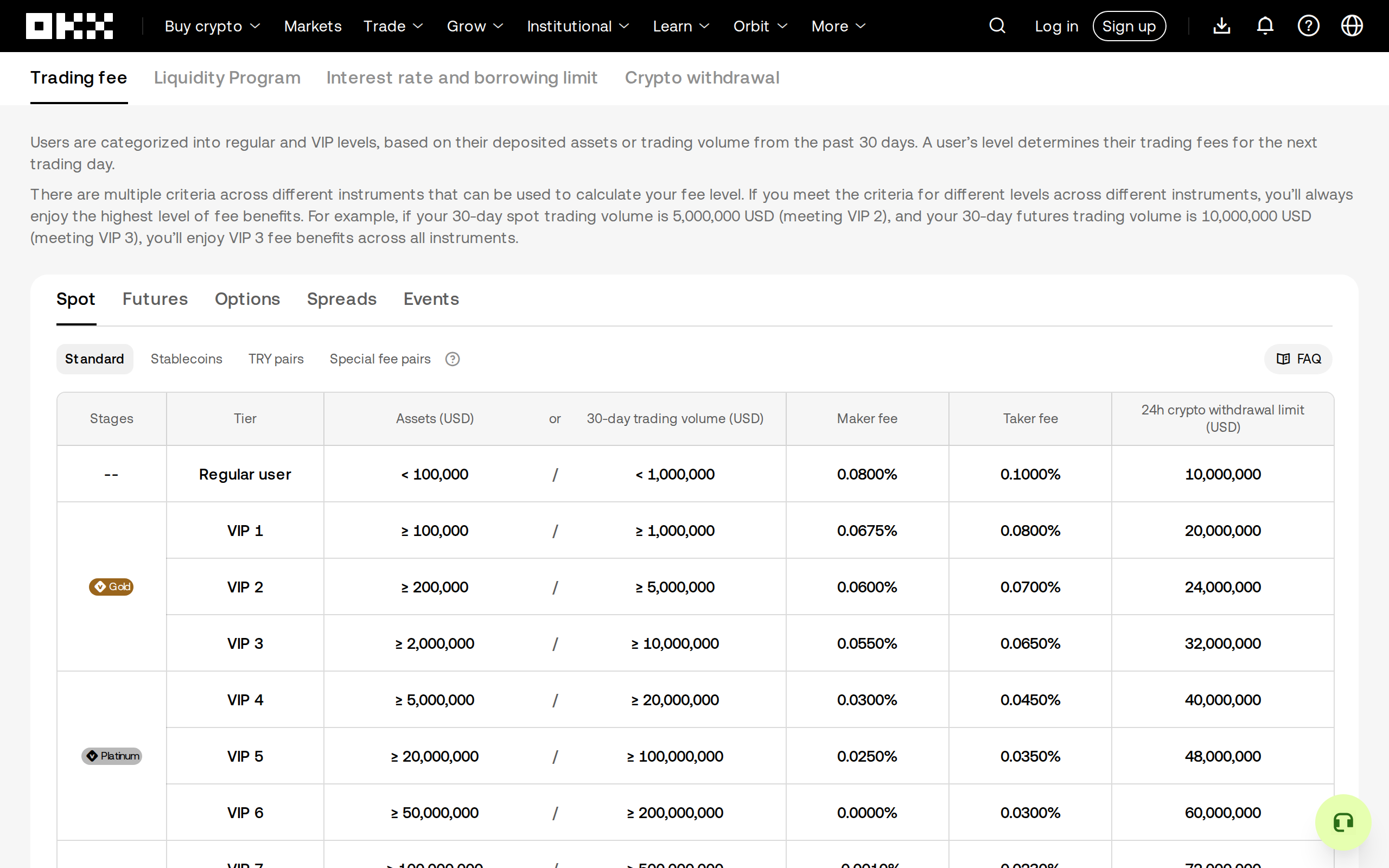
Two cautions. First, maker rates only apply when your order rests on the book, and market orders pay the higher taker rate. Second, spreads on thin pairs cost more than the fee line, so compare the full execution price, not the percentage.
The trading terminal
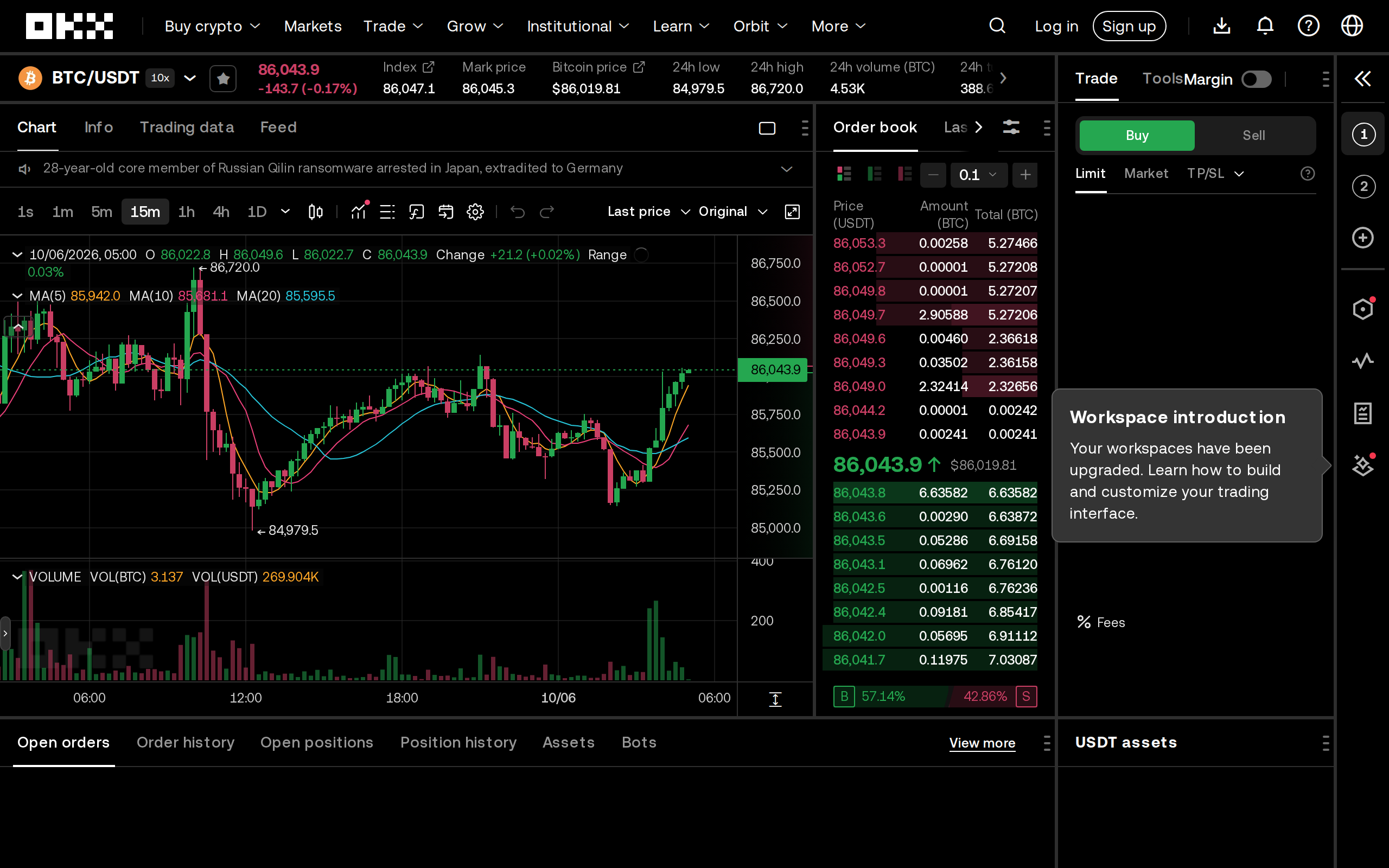
The spot screen is what experienced traders expect: order book, depth chart, order types and a pair list on one view. It is busy by design and beginners will feel lost. A simpler buy flow exists, but OKX's strengths are on the pro side.
Safety, as far as anyone can check
Three things stand up to inspection. OKX publishes proof of reserves monthly with zk-STARK verification, and Coin Bureau's analysis notes a long unbroken run of publications. It holds a full MiCA licence from Malta's MFSA, secured in January 2025. It also reports licences or registrations in Dubai and Australia.
What proof of reserves does not show is liabilities in full, so treat it as a useful signal, not an audit. The standard advice applies: keep only trading balances on any exchange and hold long-term savings in your own wallet.
The part that varies by country
OKX is not one product everywhere. The US service launched in April 2025 from a new San Jose base and is reported to be licensed in 40+ states, while the European service rests on MiCA. Derivatives, tokenized stocks and some earn products appear in one region and vanish in another.
That patchwork has a practical consequence. A glowing review from a trader in Singapore says little about what you can open in Ohio or Lyon. Before you fund an account, open the product list while logged in with your own verified country, and read the terms for the specific entity you are contracting with. The legal counterparty differs by region, and so does the protection you have if something goes wrong.
Withdrawals are the other check we would run on day one: move a small amount out to a wallet you control, confirm the network fee and the arrival time, and only then size up. It is dull, and it is the best single test of any exchange.
Who should use it
Active spot and derivatives traders who want deep books and lower fees.
DeFi users who want an exchange on-ramp tied to a wallet.
Not first-time buyers, who will find a calmer app elsewhere.
Not anyone who treats past enforcement as disqualifying.
Verdict
OKX earns a solid score for product breadth and cost, and loses points for a compliance history that a cautious reader cannot ignore. It is a tool for people who already understand custody and counterparty risk. Nothing here is personal financial advice: confirm availability, fees and rules in your own country before you deposit anything.
Specifications
- Account
- Free, KYC required for most features
- Spot maker fee
- From 0.08% for regular users
- Fee model
- Regular and VIP levels by assets or 30-day volume
- Web3 wallet
- Non-custodial, 130+ native chains
- Proof of reserves
- Monthly, zk-STARK based
- EU licence
- MiCA, Malta MFSA (January 2025)
- US status
- Operating again since April 2025 after DOJ settlement
As published by OKX when we tested it.