Gemini Review: A Compliance-First Exchange That Has Left Europe and Charges for the Comfort
Gemini sells trust: a New York trust charter, SOC 2 audits and strict controls. We check what that costs in fees, why European buyers can no longer count on it, and what the Earn settlement and 2026 layoffs say about the company.
The verdict
Gemini is a defensible choice for a US buyer who wants a regulated venue with audited security and does not mind paying for it. It is a poor choice on cost for small trades, and European readers should check first, because Gemini announced in 2026 that it is closing its UK, EU and Australia customer accounts. The Earn collapse and heavy 2026 job cuts are also reasons to hold balances in moderation.
Best for US buyers who put compliance ahead of low fees
Pros
- New York trust company with NYDFS oversight and SOC 1 and SOC 2 Type 2 audits
- 2FA is mandatory, with hardware key support and withdrawal address allowlisting
- ActiveTrader fees fall to 0.25% maker and 0.50% taker above $25K monthly volume
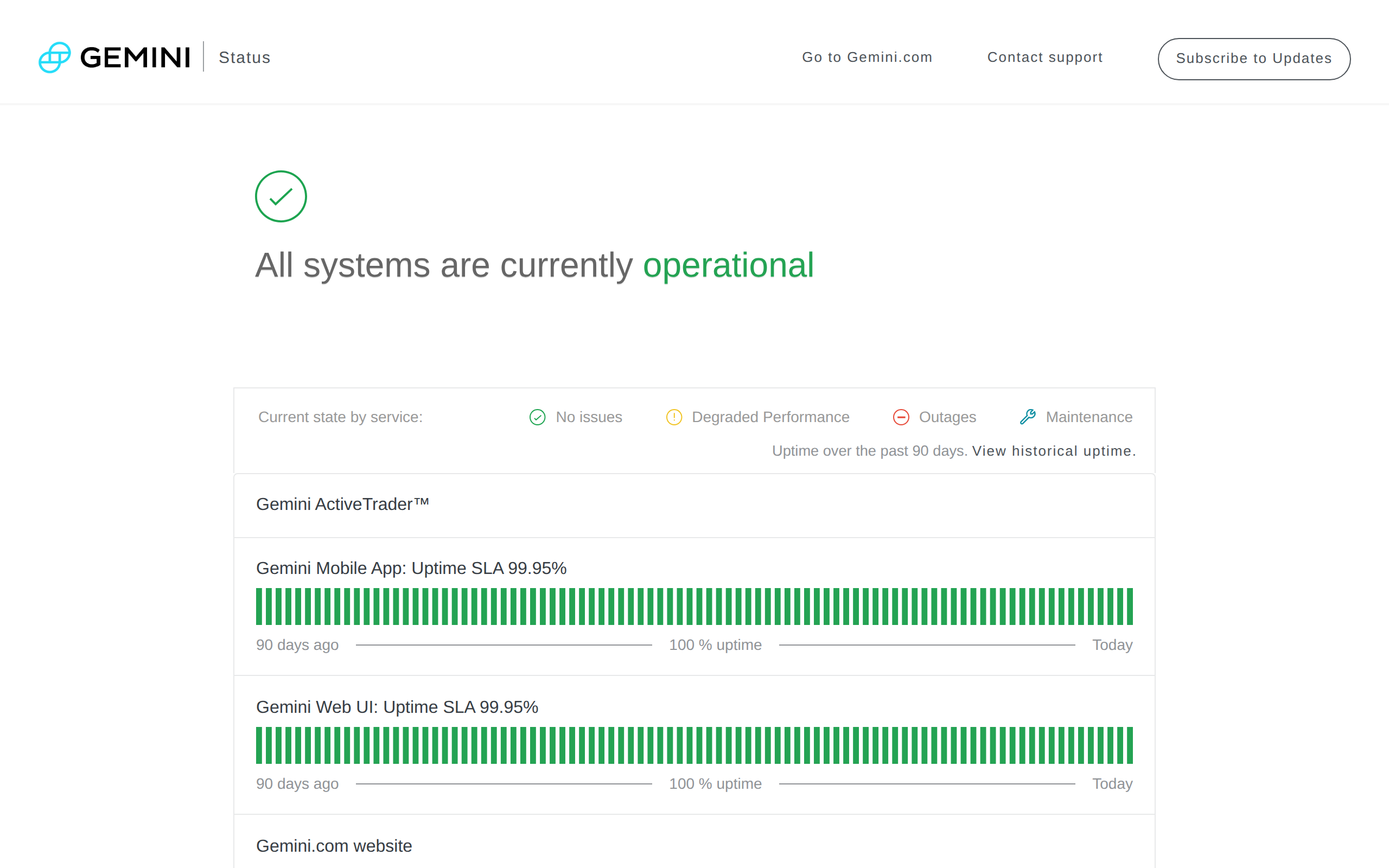
- Public fee schedule and a status page make costs and outages easy to check
Cons
- ActiveTrader starts at 0.60% maker and 1.20% taker below $10K of 30-day volume
- Gemini announced it is closing UK, EU and Australia customer accounts in 2026
- The Earn programme froze in 2022 and ended in a $50M New York settlement
- About 30% of staff were cut in early 2026 and three senior executives left
Gemini asks for your trust before your money. Its pitch is a New York trust charter, audited controls and a founder pair who talk about compliance more than most of the industry. That pitch is real, and it comes with three catches: the fee table, the Earn collapse, and in 2026 a decision to leave several markets, Europe among them.
Start with where you live
If you are in the United States, read on. If you are in the UK, the EU or Australia, stop and check your status first. Bloomberg reported in February 2026 that Gemini would close customer accounts in those regions as part of a cut of about a quarter of its staff. The angle we were asked about, whether Gemini's compliance focus is worth the fees for American and European buyers, has a short answer for Europeans: the question may no longer be open to you.
What the safety claim rests on
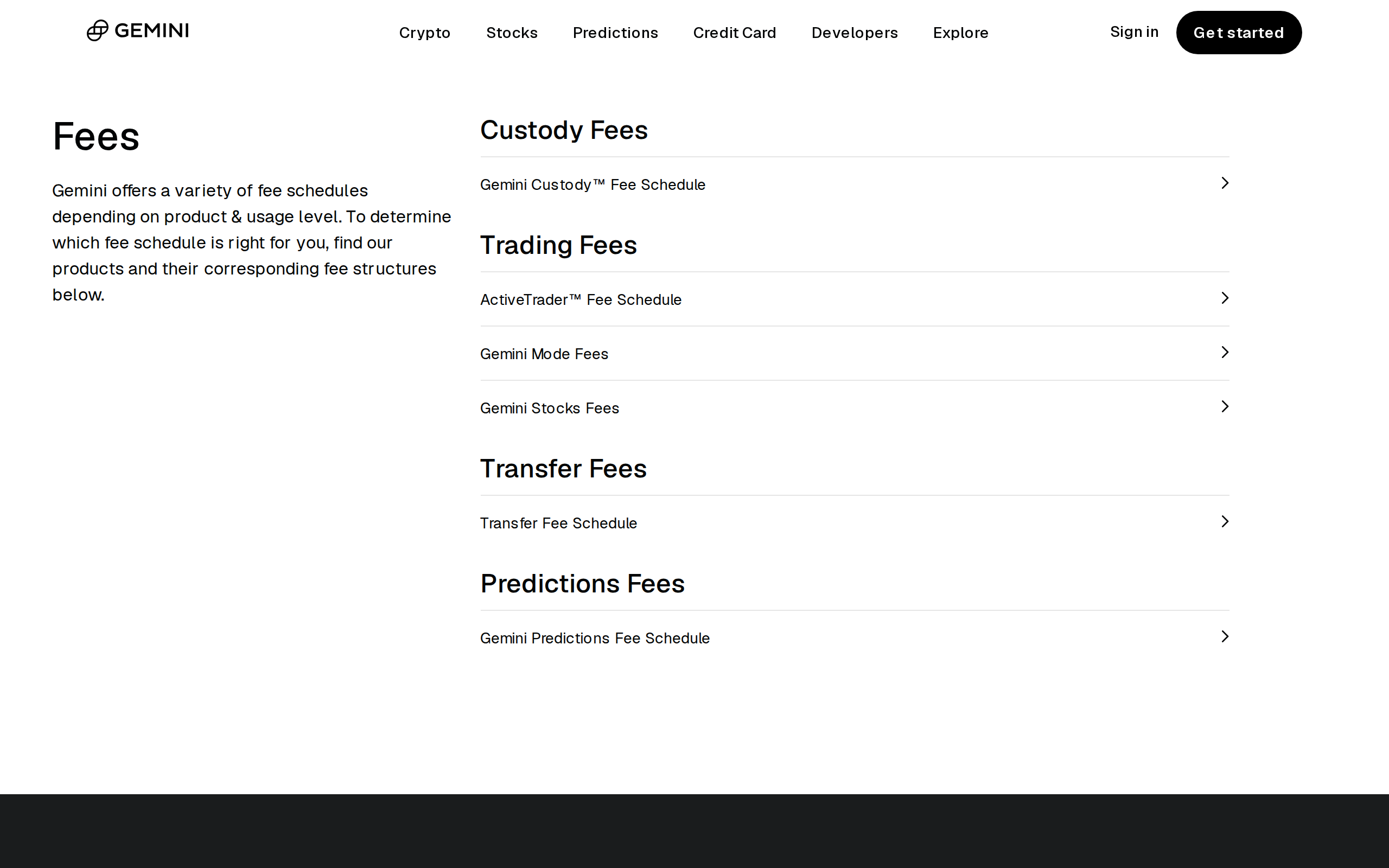
Gemini's security page says it was the first crypto exchange and custodian to earn SOC 1 Type 2 and SOC 2 Type 2 reports, and it also lists ISO 27001. Two-factor authentication is required by default, hardware keys such as a YubiKey work, and you can allowlist withdrawal addresses so a thief cannot send funds to a new one. Gemini Trust Company is a New York limited-purpose trust company, which puts it under the state's financial regulator.
None of that makes funds insured against loss, and the page does not say so. An audit report describes controls at a point in time. It is evidence of process, not a guarantee. We rate the security setup as among the better ones for a retail exchange, and we would still keep long-term holdings in your own wallet.
The fee table is where trust gets billed
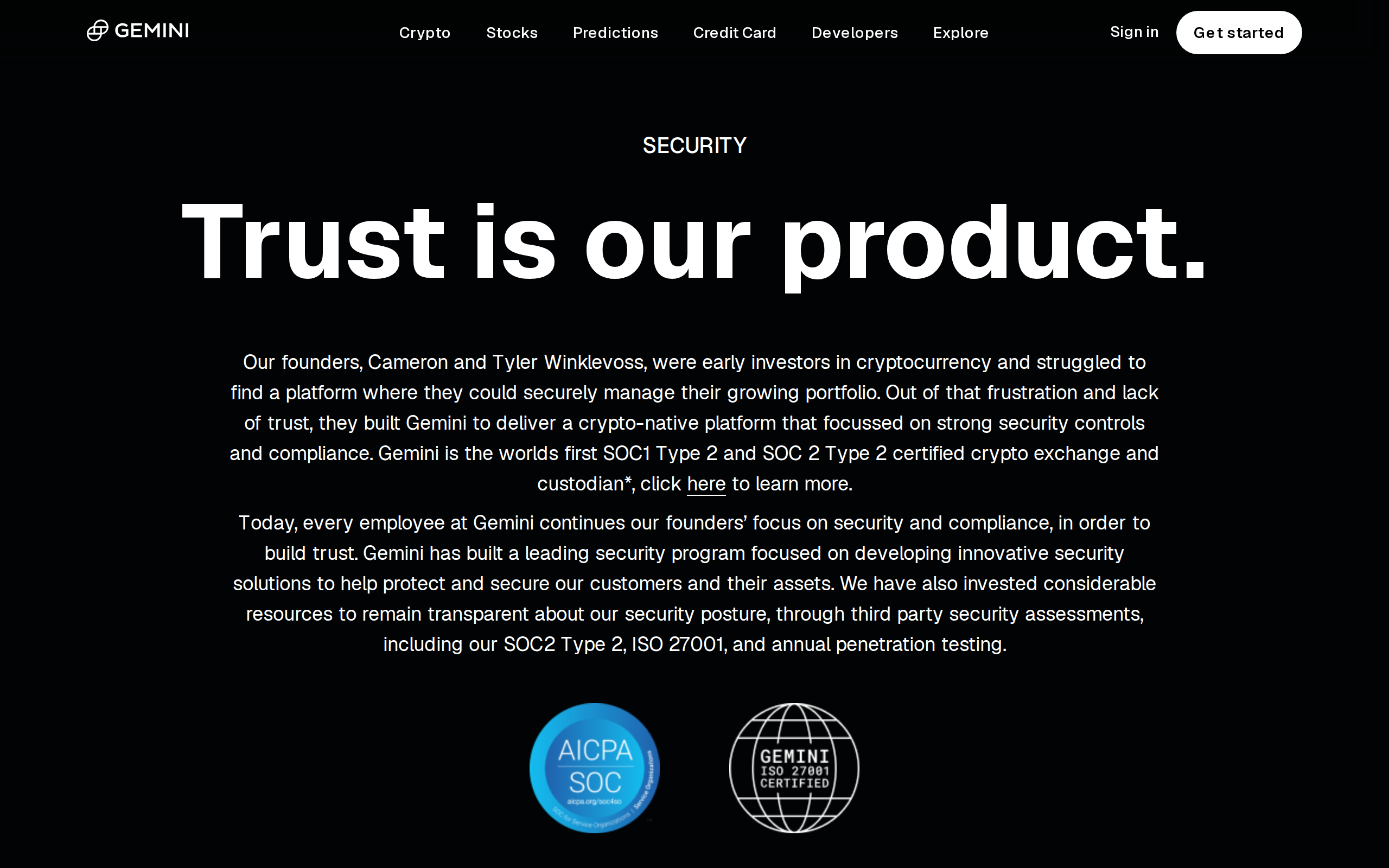
The simple buy and sell screen is the expensive one. Third-party reviews put its fees up to 1.49% plus a convenience fee of around 1% on small trades, so a casual purchase can cost 2% or more before the spread. That is the price of the easiest interface.
The cheaper route is ActiveTrader, and here the number in the work order and the number on the page disagree. Several review sites quote 0.20% maker and 0.40% taker as the entry rate. Gemini's own schedule shows something different: 0.60% maker and 1.20% taker under $10,000 of 30-day volume, 0.40% and 0.80% from $10,000, and 0.25% and 0.50% from $25,000. The rate falls to 0.00% maker and 0.02% taker only at $250 million a month. We trust the official page.
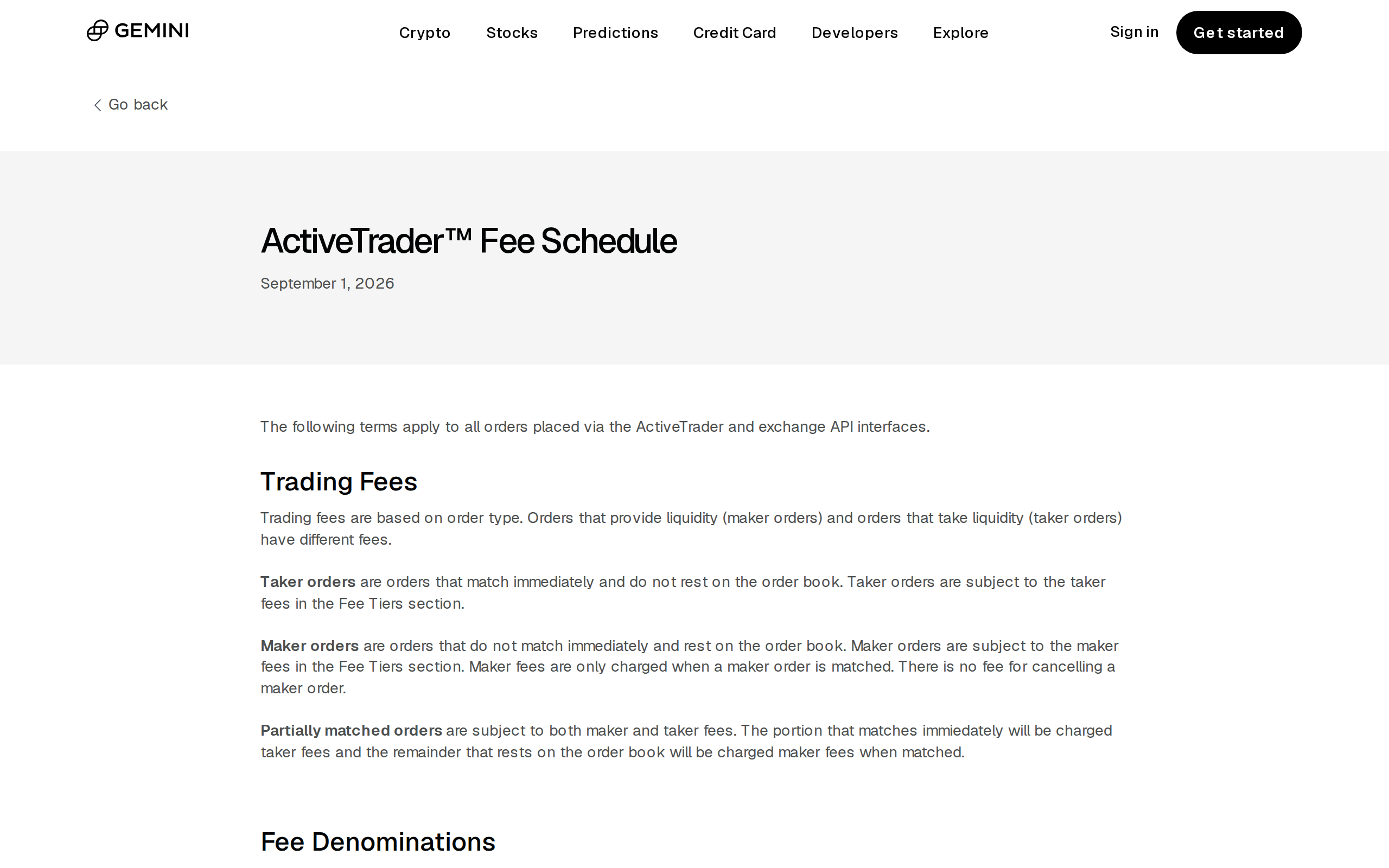
For a trader doing under $10,000 a month, those rates are high next to the big global venues. Gemini is competitive only if you value the regulatory wrapper and trade at volume.
The Earn collapse and the company's recent year
In 2022 Gemini Earn froze when its lending partner Genesis halted withdrawals. New York's Attorney General sued, and in 2024 announced the recovery of $50 million for Earn investors, with Gemini barred from lending programmes in the state. Customers eventually got their coins back through the Genesis bankruptcy process, but the episode showed that a regulated brand can still pass risk to its customers.
Gemini listed on Nasdaq as GEMI in September 2025. Within months the company cut roughly 30% of staff and CFO Dive reported that its CFO, COO and chief legal officer left. Reports also put the stock far below its $28 IPO price. A company in cost-cutting mode is not in danger by that fact alone. It does mean you should not treat a balance on the platform as risk-free, and you should keep your trade history exported.
Who should and should not use it
Gemini fits a US buyer who wants one regulated place for a modest number of trades, values hardware key login and wants to check its fees in a table. It does not fit a high-frequency small trader, a reader in a market Gemini is leaving, or anyone chasing the widest coin list. We are not recommending any asset or telling you how much to hold.
Verdict
Gemini earns respect for its controls and loses points for fee levels, an Earn episode that cost customers months of access, and a shrinking footprint. We give it a middling score: a safe-feeling exchange that is not a cheap one, and in 2026 not an available one for many European readers.
Specifications
- Entity
- Gemini Trust Company, LLC (New York)
- Audits
- SOC 1 Type 2, SOC 2 Type 2, ISO 27001
- ActiveTrader entry fee
- 0.60% maker, 1.20% taker under $10K
- ActiveTrader at $25K+
- 0.25% maker, 0.50% taker
- Top tier ($250M+)
- 0.00% maker, 0.02% taker
- Account security
- Mandatory 2FA, hardware keys, address allowlist
- Listed company
- GEMI, IPO September 2025 at $28
- Availability
- US; UK, EU and Australia accounts closing
As published by Gemini when we tested it.